



Tenants of New York City Housing Authority developments in Chelsea went to court Wednesday to at least temporarily block the demolition of nearly 20 buildings and new construction by a private developer.
NYCHA argues it’s seeking to demolish many-decades-old buildings and let private companies rebuild, while some residents argue relocations would be traumatic and they would be packed into fewer, bigger buildings.
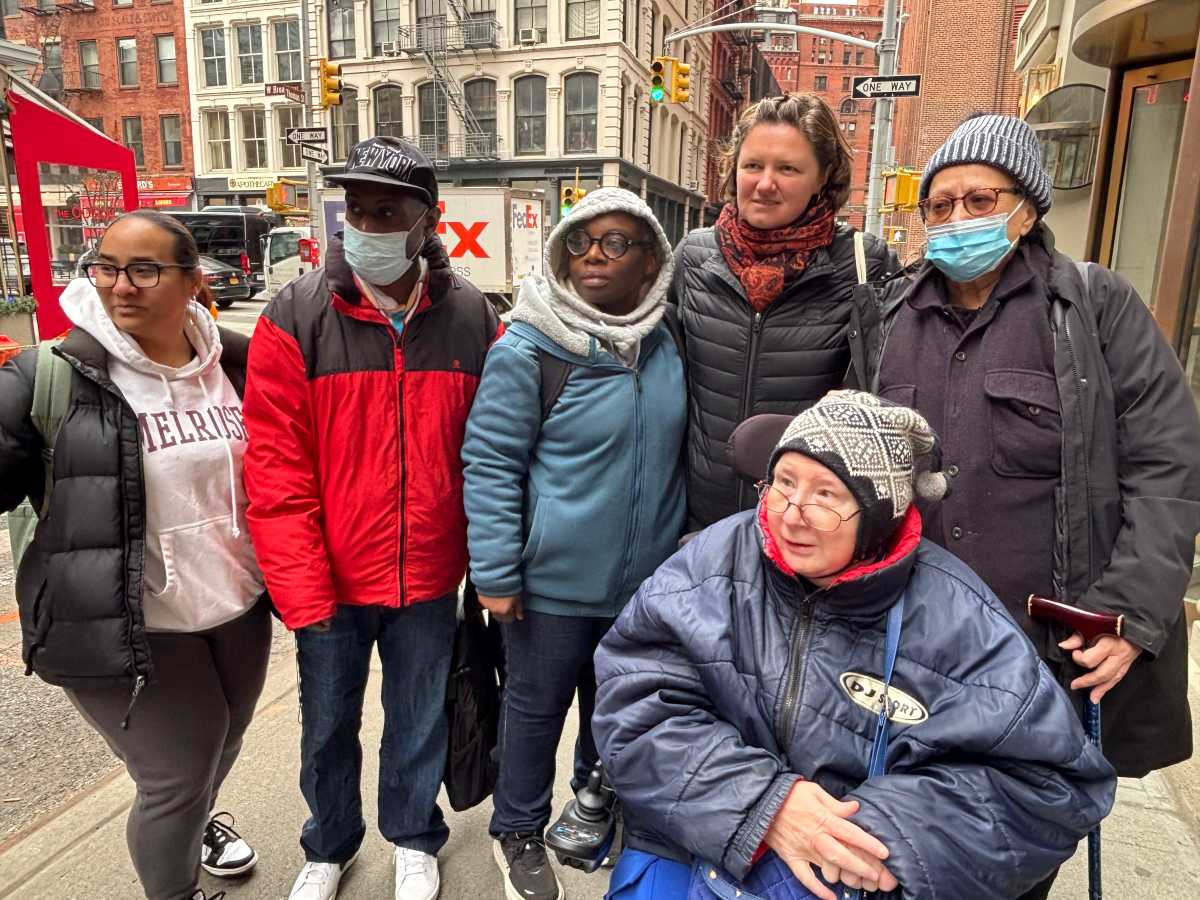
The plaintiffs (including nine public housing residents) and their supporters filled a small, packed a New York State Supreme Court hearing in Lower Manhattan presided over by New York State Supreme Court Judge David B. Cohen, who said he would soon rule on the request for a preliminary injunction.
Plaintiffs, including former New York State Senator and nearby Chelsea resident Thomas K. Duane, are seeking to stop the demolition and replacement of nearly 20 buildings and 2,000 apartments including the Fulton, Elliott, Chelsea and Chelsea Addition public housing.
Protestors later that day united at the Hudson Guild, located at that complex, protesting the plan to demolish and rebuild the public housing, along with market-rate and affordable apartments.
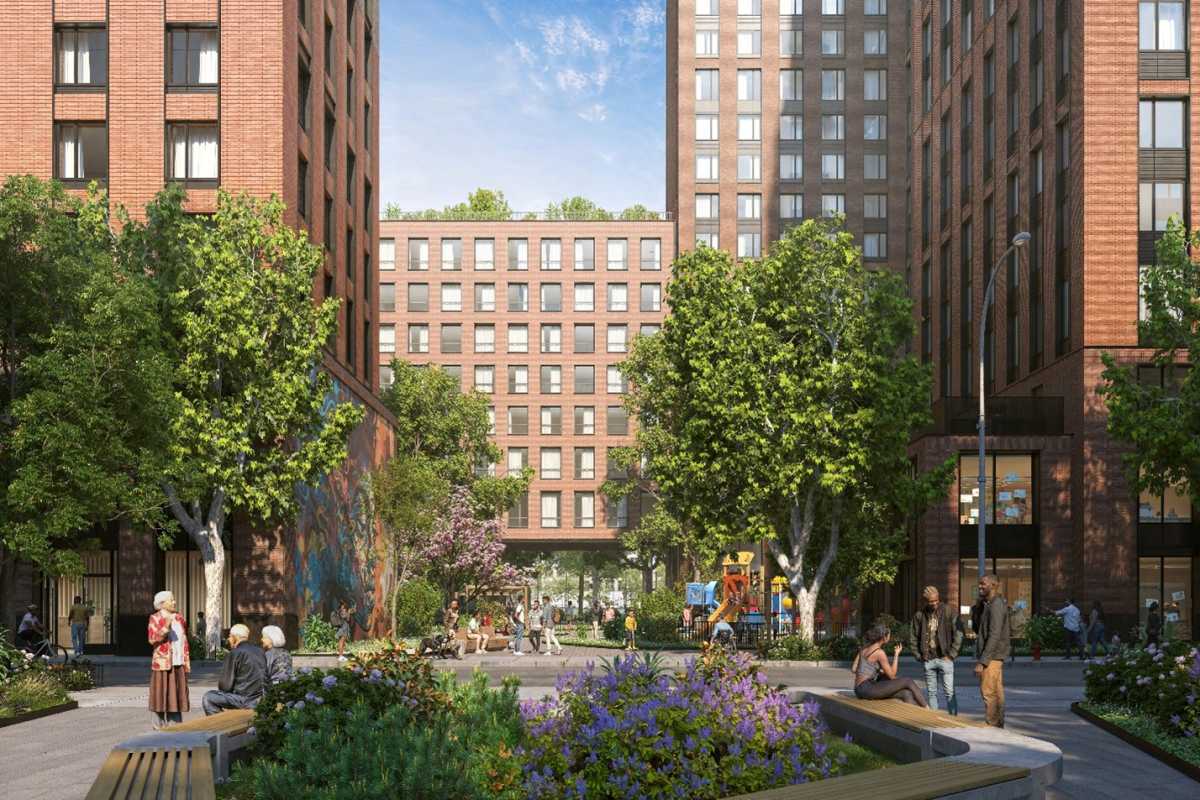
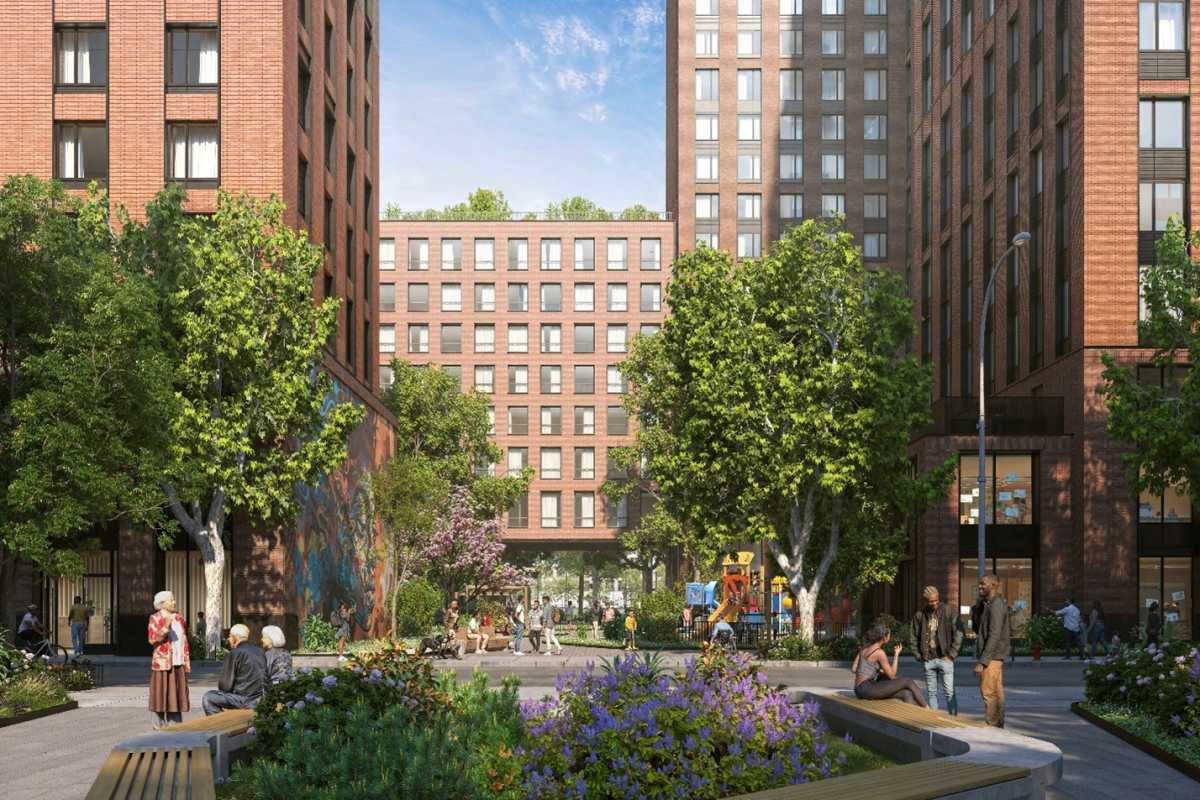
A new roughly $2 billion development by the Related Cos. (Hudson Yard developer) and Essence Development would add 1,000 affordable and 2,500 market-rate apartments, while consolidating tenants from 18 buildings into six larger structures.
The apartments also would convert from Section 9 federal housing to Section 8, which many tenants say provides fewer protections.
“The public interest here is undeniable,” attorneys John R. Low-Beer and Charles N. Weintstock argued in filings. “Plaintiffs seek not only to protect the homes of the current Chelsea Developments residents, but also to protect the neighborhood community from myriad environmental harms.”
They contend the project would result in “the unnecessary loss and destruction of their long-term homes, loss of community, forced relocation to apartments” in buildings “not suitable for disabled people” sometimes on high floors with elevators needing repair.
“The situation is so traumatic to them that they express fear of dying as a result of NYCHA’s actions,” the suit argues regarding elderly and disabled tenants. “If ever a case were ‘now or never,’ this is it.”
Former State Senator Thomas K. Duane, a plaintiff and Chelsea resident, said the project shifted from renovate to relocate.
“Originally, the plan was not to demolish the buildings, but to renovate and to put some more housing on the campuses,” Duane said. “It’s 100 percent bait and switch.”
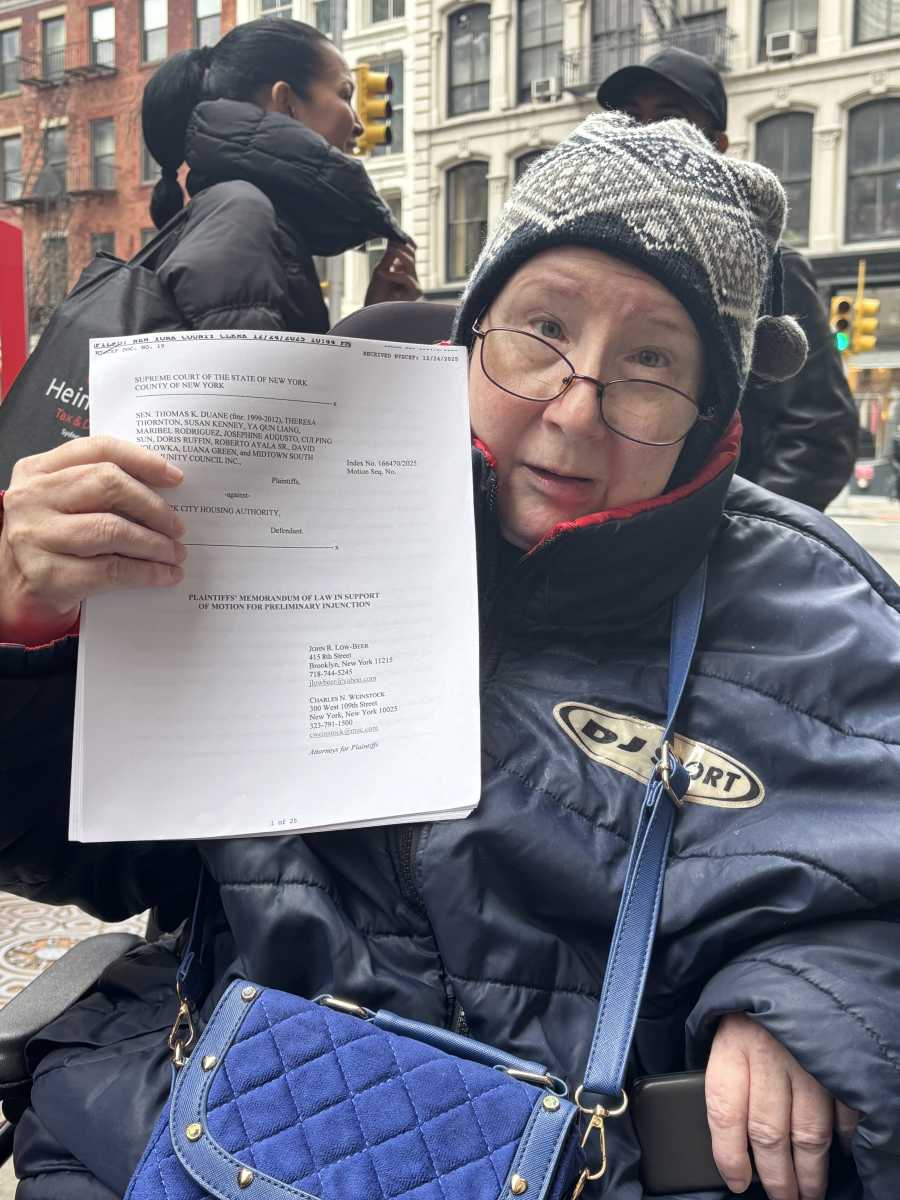
While NYCHA says overall residents support the plan, some such as Theresa Thornton, 62, a plaintiff, said that’s not the case.
“They’re asking me to move, texting, knocking on the door,” Thornton, in a wheelchair, said. “I don’t want to move. I’m disabled. I have a lot of medical reasons. They told me I have to move, but I’m not moving.”
RX for Renovation
While some residents argue they’re being removed, NYCHA argues it’s bringing in private developers who would build bigger and better and acting in the best long-term interest of everybody.
Elizabeth Knauer, a principal at Sive, Paget, Riesel in Manhattan, said tenants are “entitled to remain in units in the development” and would not lose subsidies. “This is not a new plan or project,” Knauer said, arguing it therefore wouldn’t trigger reviews for new projects.
She said housing law indicates NYCHA must “serve the public good,” but has “broad powers,” and doesn’t indicate specific individuals can remain in specific units. Knauer added a “few opponents” should not be able to pause a project, adding there was no reason for seeking an injunction “this late in the day.”
NYCHA said the buildings have $900 million in “mounting physical needs,” and residents would have a right to return, while residents argue that right is not ironclad.
NYCHA also said surveys indicated support for rebuilding, while some said those were misleading. “The survey didn’t mention demolition,” Duane said. “It said, ‘Do you want your apartment renovated, basically.’”
To be evicted or not to be
Low-Beer said laws indicate “public housing must remain public and continue to be controlled by NYCHA and not privatized,” and the plan should go through the Uniform Land Use Review Procedure.
“The first building they want to demolish is an all-senior building,” he said. “They’re destroying their community. They’re trying to put them into apartments that aren’t suitable or comparable.”
Low-Beer added until HUD approves a project, which hasn’t happened here, people cannot be convinced and relocated, although NYCHA has said it expects approval.
“I would contend that building more luxury apartments in Manhattan is not a solution or even a step towards resolving the affordable housing crisis,” Low-Beer said.
Judge Cohen last year denied NYCHA’s requested injunction, which would force residents to relocate, rather than evicting in housing court, calling the approach “completely inappropriate.”
Reading, Renovation and Relocation
President of the Elliot Chelsea Residents Association, Renee Keitt, who ran against the project, believes her community opposes the project.
“Nobody bothered to ask us if we wanted it in the first place. They came in and did what they want,” she said. “Now we’re supposed to let them do whatever they want.”
She said some residents agreed to relocate and give up Section 9 rights for Section 8 housing after being pressured.
“They kept saying if you don’t move, you won’t have a home. You’ll be evicted,” Keitt said. “Voluntary means you can decide. You don’t keep knocking on the doors. You don’t get summonses asking people to come to Supreme Court.”
Low-Beer said while agreements to relocate at this point are voluntary, that’s not how they are presented. “It’s not voluntary,” he said. “If somebody puts a gun to your head and they say, ‘Move,’ and you move, is that voluntary?”
While NYCHA argues the new buildings will be bigger and better, the suit cites years of demolition and construction, “disruptions, noise and environmental harm” followed by “the loss of trees and open space and light and air” along with “density that erodes the neighborhood character.”
“I’m here to support my Chelsea neighbors,” Karen Ortiz, a nearby Chelsea resident, said. “I’m a lawyer and former judge. I think they have an excellent legal argument.”
NYCHA argues residents wouldn’t suffer irreparable harm from the project, which would replace existing apartments and add others, while residents argue a temporary injunction would pause the process.
“NYCHA cannot point to any injury from briefly postponing its efforts while the Court considers the preliminary injunction,” the plaintiffs argue. “The Court’s review would be a blip on the timeline of this long-gestating project.”