



Three short-term rental policies shifted this week, and they did not move in the same direction. Chicago went furthest, naming Airbnb itself as a defendant rather than only the host operating on it. British Columbia loosened a rule for a single city ahead of its summer season. Ireland set out to keep new operators out of its larger towns.
Chicago Puts Airbnb Itself on the Hook, Alongside a Top Host
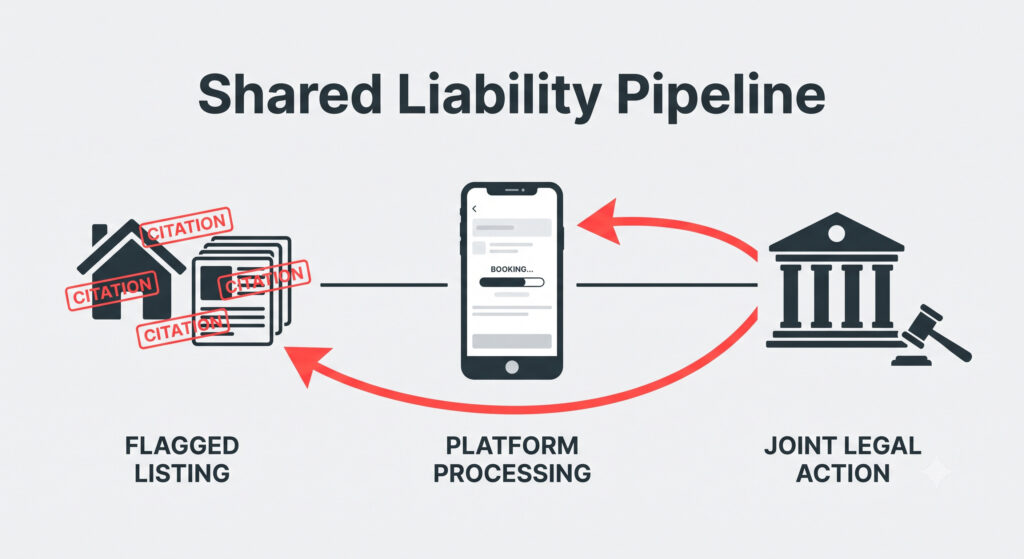
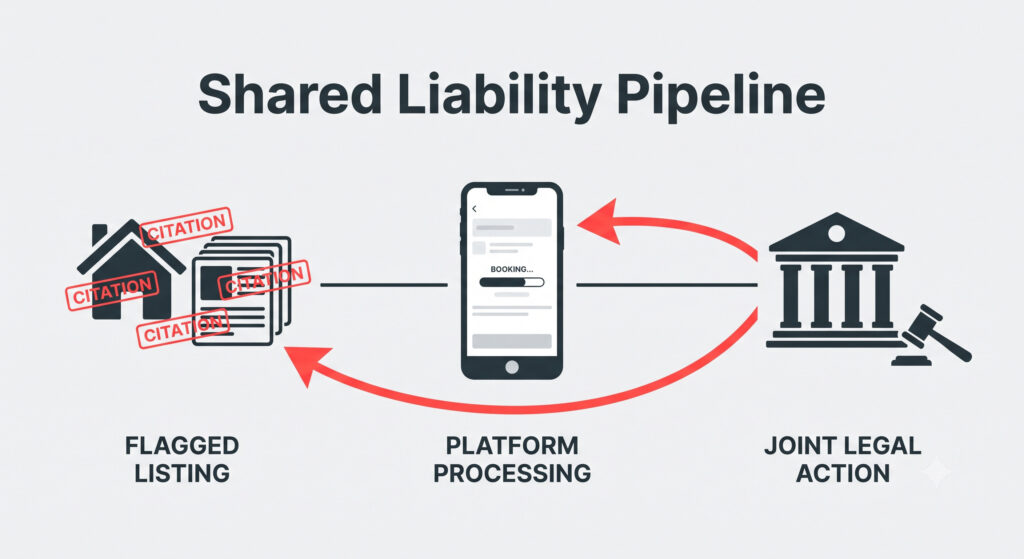
- On June 23, 2026, the City of Chicago filed a lawsuit against Airbnb and its affiliate Airbnb Living LLC, together with Slumber Stay LLC, one of the city’s most active hosts. The suit also names Slumber Stay’s manager, Milan Rubenstein.
- The complaint, filed in Cook County Circuit Court, alleges repeated violations of the city’s Shared Housing Ordinance and consumer protection laws.
- The city says it cited Slumber Stay nearly 200 times across 2024 and 2025 for failing to register units and reusing a single non-transferable hotel licence across unrelated properties, then continuing to rent after paying earlier fines.
- It alleges Airbnb processed bookings for those unregistered listings, putting profit ahead of compliance.
- The case follows the city’s earlier review of a location-based rental ban, part of a wider enforcement push around fast-growing investor-owned listings.
- Mayor Brandon Johnson framed the suit as requiring short-term rental companies to follow the same rules as everyone else, part of building a safer and more affordable Chicago. The city says the action is meant to protect renters and neighbourhoods while preserving its affordable-housing supply.
Uvika’s Views
- Platform Liability Is the Real Escalation: Suing Airbnb alongside the host marks a clear step up in enforcement. By trying to hold the platform legally accountable for what hosts do on it, Chicago is shifting from routine citations to the courtroom.
- Corporate Host Vulnerability: Going after an operator cited nearly 200 times signals that authorities are hunting egregious, multi-unit offenders. Managers running large arbitrage portfolios may want to audit their local compliance now, since cities are using historical citation data to build high-profile cases.
Kelowna Wins an Early Opt-Out From BC’s Principal-Residence Rule
- On April 17, 2026, the British Columbia government confirmed Kelowna could opt out of the provincial rule that limits short-term rentals to principal residences, with the change taking effect June 1, 2026.
- A one-time regulation brought Kelowna’s opt-out forward to June 1, recognising major summer events in the city. From 2027, eligible municipalities can use the same accelerated calendar (a February 28 submission and a June 1 effective date).
- Kelowna qualified because its rental vacancy rate reached roughly 6.4% in 2025, well above the 3% threshold the province requires for two consecutive years.
- Hosts no longer need to meet the principal-residence requirement for provincial registration, provided they follow local bylaws.
- The city still limits primary-use short-term rentals to buildings in tourism-zoned areas and requires a local business licence.
- The relaxation is narrow against a province that has otherwise held its line, keeping principal-residence rules in place even where summer tourism demand is high.

Uvika’s Views
- The Vacancy Rate Exemption: Tying the opt-out to a healthy vacancy rate and a busy events calendar is a pragmatic move. It concedes that strict principal-residence mandates do not fit every market, especially one that has rebuilt its rental supply.
- Zoning Still Rules: The provincial rule lifted, but the city’s zoning did not. Operators should treat relief from a provincial rule as separate from municipal limits: tourism-zoned buildings and a valid business licence remain the real gate.
Ireland Moves to Bar New Short-Term Lets in Its Largest Towns
- On June 16, 2026, the Irish government agreed a draft National Planning Statement on short-term letting, brought to Cabinet by Minister for Housing James Browne.
- The policy would generally refuse new planning permission for short-term lets in cities and towns with a population above 20,000.
- Operators who have run short-term lets for more than seven years would get a simplified route to regularise their planning through a retention process.
- Towns under 20,000 would have a two-year window to obtain planning permission.
- The statement sits alongside Minister for Enterprise and Tourism Peter Burke’s Short-Term Letting and Tourism Bill, which creates the Fáilte Ireland national register and lets the State fine non-compliant platforms up to 2% of turnover, mirroring the EU’s platform-compliance rules.
- The register is due to open on December 1, with all operators required to register by December 31.

Uvika’s Views
- A Lifeline for Veterans: The seven-year route gives established operators a way through. Long-running hosts can seek retention and sidestep the commercial-planning wall that new entrants now face.
- Urban Lockout: A 20,000 threshold reads as a near-total block on new urban inventory. Managers chasing scale will likely look to smaller towns and rural areas, where new tourist accommodation is still viable, and to acquiring lets that already hold permission.
Track short-term rental regulation trends and what each shift means for your operating environment.

Uvika Wahi is the Editor at RSU by PriceLabs, where she leads news coverage and analysis for professional short-term rental managers. She writes on Airbnb, Booking.com, Vrbo, regulations, and industry trends, helping managers make informed business decisions. Uvika also presents at global industry events such as SCALE, VITUR, and Direct Booking Success Summit.