



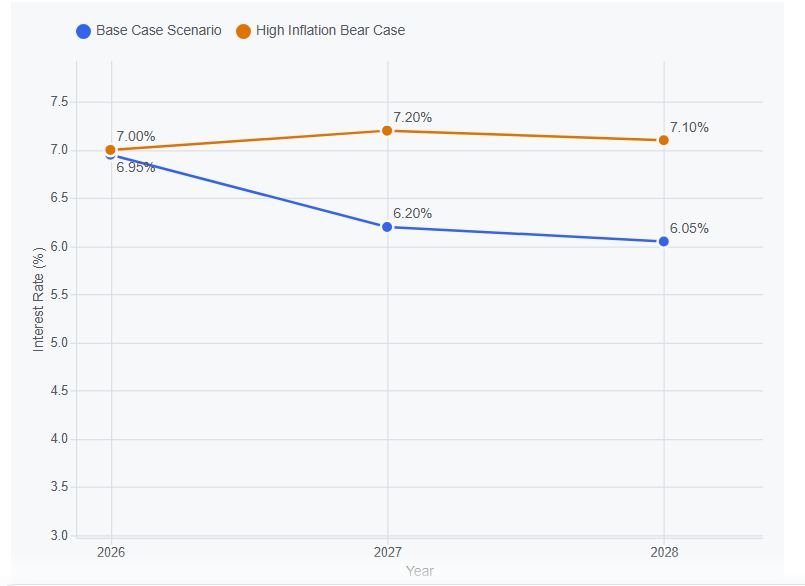
Over the next two years, from 2026 to 2028, the U.S. housing market looks headed for a slow, steady stretch rather than a crash. Home prices are expected to keep rising, but gently, while mortgage rates stay higher than many buyers would like. With fewer homes changing hands than in recent years, the market should feel calm and measured, not frenzied.
What does that mean for you? Whether you’re saving for your first home, thinking about selling, or weighing real estate as an investment, the next couple of years will call for a different game plan. The rules are shifting a little, but there’s no reason to panic.
U.S. Housing Market Predictions for the Next 2 Years
The Big Picture: A Slow and Steady Ride
Think of the housing market like a big ship. Right now, it’s not speeding towards a huge storm or cruising on calm seas. Instead, it’s moving through the water at a steady, manageable pace. This is often called “normalization.”
This means a few key things will likely happen:
- Home Prices: They won’t be jumping up super fast or falling down a cliff. We’re looking at small bumps, maybe between 0.3% and 4.0% growth each year. That’s much slower than the wild price jumps we saw a while back.
- Selling and Buying: Fewer people will be buying and selling houses compared to the busiest times. It’s like a popular restaurant having a steady stream of customers, but not a huge line out the door.
- Mortgage Rates: Getting a loan to buy a house will still cost a bit. Rates are expected to stay around 6.0% to 7.0%. That’s higher than during the super-low rate times, but not sky-high.

Why is this happening? Well, a few big reasons are shaking things up.
Why the Calm? The “Great Housing Reset”
Experts are calling what’s happening now the “Great Housing Reset.” It sounds dramatic, but it’s mostly about finding a better balance.
It’s like when too many people want the same toy at the store. Prices go up! But when prices get too high, fewer people can afford the toy, so sales slow down. That’s kind of what’s happening with houses.
- Hard to Afford: Many people find it tough to afford a house right now because prices and interest rates are higher than they used to be. This means fewer people are rushing to buy.
- Not Enough Houses: At the same time, there aren’t enough houses for everyone who wants one. This helps keep prices from dropping too much.
This creates a bit of a waiting game. Sellers might not get the crazy high prices they hoped for, and buyers might not find all the deals they want.
What the Experts Are Saying (It’s Not a Crash!)
Many smart people who study the economy and housing are looking ahead. They don’t see a big housing crash coming. Instead, they see a market that’s settling down.
Here’s a peek at what some of them predict for the next few years:
| Forecasting Institution | 2026 Price Growth | 2027 Price Growth | 2028 Price Growth |
|---|---|---|---|
| Fannie Mae | 2.3% to 3.2% | 1.0% to 2.2% | Modest Growth |
| J.P. Morgan Global Research | Flat (0.0%) | Up by 3.0% | Stable Growth |
| Capital Economics | Stagnant | Up by 2.5% | Up by 4.0% |
| MBA | 0.3% to 0.4% | 0.4% | 1.2% |
As you can see, most of these smart folks think prices will go up a little, but not by a lot. They also expect fewer homes to be sold each year, maybe around 4.13 to 4.7 million homes.
Investing in the Housing World: What About Your Money?
If you’re thinking about putting your money into real estate, there are a few things to keep in mind. It’s important to be careful and not put all your eggs in one basket.
⚠️ A Little Warning: Real estate can be tricky, and markets change quickly. If things don’t go as planned, you could lose money. It’s always best to spread your investments around instead of putting all your money into just one type of property or company.
Here are some areas that might do differently:
- Home Builders: Companies that build houses are having a harder time. They often have to lower prices or offer deals to get people to buy their new homes. This can make it harder for them to make as much profit.
- Real Estate Investment Trusts (REITs): These are like baskets that hold lots of different real estate properties. Some parts of REITs might do better than others. For example, buildings where people rent apartments are expected to stay popular because people who can’t buy a house might rent for longer.
- New Laws for Homes: There’s a new law coming in early 2027 that might make it easier to build certain kinds of homes, like homes made in factories. This could create opportunities for those types of home builders later on.
Where in the Country Are We Looking? Regional Breakdowns
The housing market isn’t the same everywhere. Some areas are hotter than others, and some are cooler. Let’s take a quick trip across the map!
1. The Northeast: Still Hot, but Harder to Get In
- What’s Happening: This region, including places like New York, Massachusetts, and New Jersey, has always been pricey. It will likely have the strongest price growth, maybe 3.5% to 5.0% each year.
- Why: There just aren’t enough houses, and lots of people want to live there.
- Good News for Sellers: If you own a home here, you might get a good price. Buyers will face tough competition.
2. The Midwest: A Good Deal for Many
- What’s Happening: Places like Illinois, Michigan, and Ohio are like a real treasure chest for home buyers. Prices are expected to grow steadily, around 2.5% to 4.0% each year.
- Why: Homes here are more affordable, and more people are looking to buy.
- Good News for Buyers: You might find more options and better prices here. The market is pretty steady.
3. The South: Catching Its Breath
- What’s Happening: States like Florida, Texas, and Georgia have had a lot of new homes built. This means prices might not go up much, perhaps only 0.5% to 1.8%.
- Why: With more houses available, the big price jumps are slowing down.
- Good News for Buyers: This is where buyers have the most wiggle room. Sellers might offer special deals to make a sale.
4. The West: Struggling with High Costs
- What’s Happening: California, Arizona, and other western states have some of the highest home prices. Growth will be very slow, maybe even flat, around -0.5% to 1.5%.
- Why: It’s just too expensive for many people to buy homes, even with interest rates staying high.
- A Tough Spot for Buyers: Affordability is the biggest hurdle here. It’s hard for prices to go up much when so few people can afford homes.
What Does This Mean for You?
The next two years are not about big, sudden changes in the housing market. It’s more about finding the right place that fits your budget and your life.
- If you want to buy: Be patient. Look for areas with more affordable homes, like the Midwest. Be ready for some competition, but it won’t be as intense as it has been.
- If you want to sell: It’s still a good time, but don’t expect the super-high offers from a couple of years ago. Focus on making your home look its best.
- If you’re investing: Think about where you put your money very carefully. Diversifying your investments is still the smartest move.
The housing market is finding its balance. It’s like a deep breath before things settle into a comfortable rhythm. Are you excited about these changes, or do you have more questions about how this might affect your specific situation?