


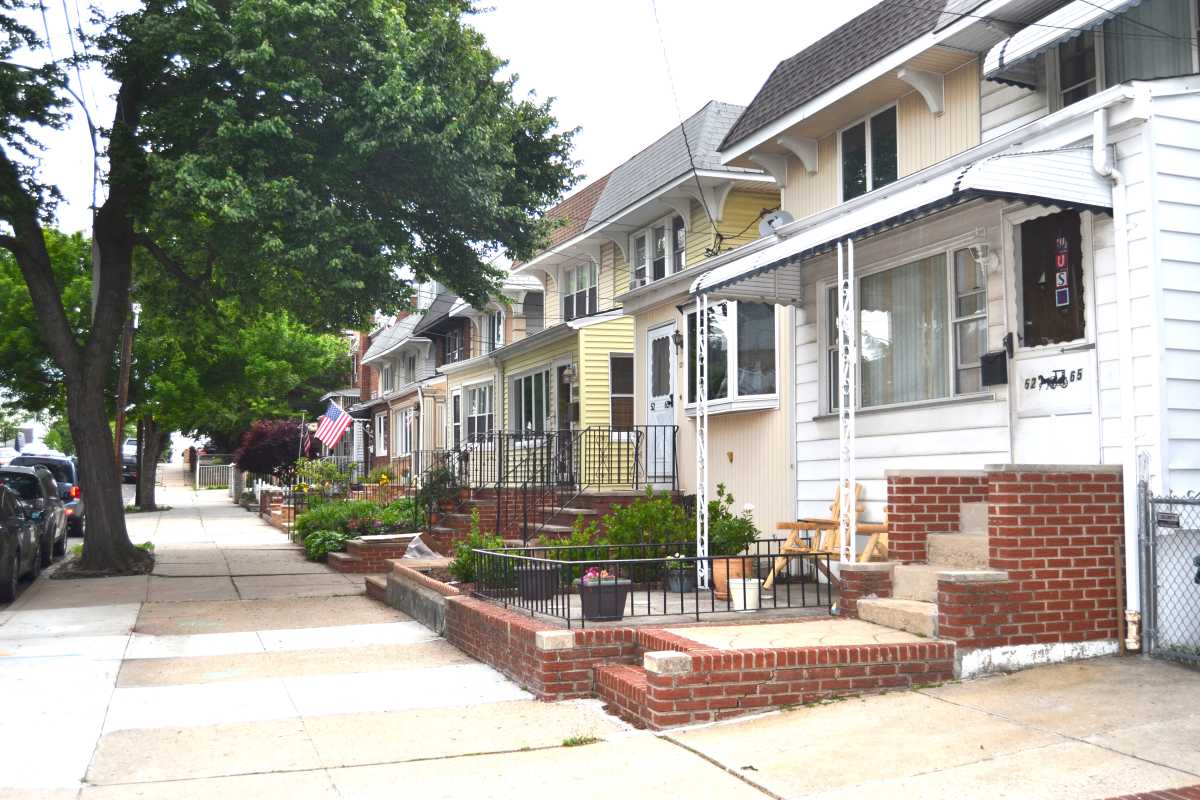
One-and two-family homes, like these in in Maspeth, Queens, could be subject to zoning changes in the City of Yes plan.
File photo/Anthony Giudice, Ridgewood Times
A new program is now available to help NYC gig workers buy their first home, a milestone not easily achieved by workers who have non-traditional sources of income, amNewYork learned on Monday.
The New York City Housing Partnership, an organization that works on affordable housing initiatives, launched the “Pathways to Homeownership” program in conjunction with Airbnb on Dec. 8. The goal is to help gig workers, including delivery drivers, writers and musicians, freelancers, and other independent workers, who do not have the paperwork required by banks that show proof of income when applying for a mortgage.
“The lack of regular paystubs, W-2s or 1099s to document income often puts gig workers at a disadvantage when applying for a mortgage to buy their first home,” said Jamie A. Smarr, president and CEO of the partnership.
Since the COVID-19 pandemic, many workers have turned to gig work to earn a living. According to NYC statistics, there are about 60,000 delivery workers, many of whom work flexible shifts or on-demand per task or job. Smarr expects Pathways to Homeownership to help about 1,000 gig workers each year in buying their first homes.
“The economy has undergone significant shifts for middle-class Americans, and it is time for us to shift our focus as well,” Smarr said. “The goal for our new Pathways to Homeownership program is to help gig workers, freelancers, seasonal workers and the self-employed with non-traditional sources of income become homeowners. The program will also advise them how to present rental or hosting income to mortgage lenders when buying a house.”
Building ‘long-term financial stability’ through homeownership
Funded by Airbnb, the program helps gig workers qualify as a first-time homebuyer by offering them tailored workshops and one-on-one counseling to help document their employment income required for mortgage approval, as well as access to city, state and private down payment assistance.
They will also receive training on how to create income, sustain ownership, avoid foreclosure and build equity.
“Homeownership is one of the strongest pathways to building long-term financial stability and generational wealth, but too often low- and middle-income New Yorkers without traditional income sources have been shut out of the American Dream,” said Warren Gardiner, Airbnb New York senior policy manager.
The housing partnership, which has been in NYC for over 40 years, creates and preserves affordable housing throughout the city through public-private teamwork, involving the private sector, as well as city, state, and federal agencies.
Rafael Espinal, president of the Freelancers Union, which boasts about half a million members in NYC, said it is “time for our financial systems” to catch up to the way many people work.
“Freelancers are building the future of work, it’s time our financial systems caught up. We hope this effort paves the way for broader reform and long-term solutions for independent workers everywhere,” he said.
Espinal added that homeownership has been “out of reach” for many independent workers due to mortgage systems that do not accurately reflect the nature of self-employment.
Support for NYC gig workers
The new program is the latest in several public and private efforts made in recent years to support the gig economy in New York. In 2023, Gov. Kathy Hochul passed the “Freelance Isn’t Free” Act, which now provides protections, rights and opportunities for recourse to freelance workers experiencing non-payment for their services.
The law protects freelancers by establishing a right to a written contract with certain terms, timely and full payment, and protection from retaliation and discrimination for exercising these rights. The Attorney General can also bring actions to obtain remedies, including damages and civil penalties, on behalf of impacted freelance workers, the legislation states.
In April 2025, the minimum $21.44/hour for app-based restaurant delivery workers went into effect. Mayor Eric Adams said at the time that the rate will continue to be adjusted annually for inflation.