



When unexpected situations arise during a rental agreement, you might wonder if a landlord can break a lease before the agreed-upon terms end. Yes, landlords can break a lease early in certain situations, but you must have a valid reason and follow notice requirements outlined in the lease agreement and local landlord-tenant laws.
A lease is usually treated as a binding contract, which means neither the tenant nor the landlord can simply walk away without a valid reason. Most states only allow early termination when specific conditions occur, such as a tenant violating the lease, failing to pay rent, damaging the property, or engaging in illegal activity. In other cases, a lease may end early if the property becomes unsafe or uninhabitable, or if both the landlord and tenant mutually agree to end the agreement.
I’ve been helping Oklahoma landlords navigate situations like these for over two decades, so in this blog, I will explain when a landlord can legally break a lease and when you cannot, along with the most common reasons leases end early. I will also provide a step-by-step guide on how to handle these situations professionally to minimize your financial risk and avoid liabilities.
When Can a Landlord Terminate a Lease Early Legally?

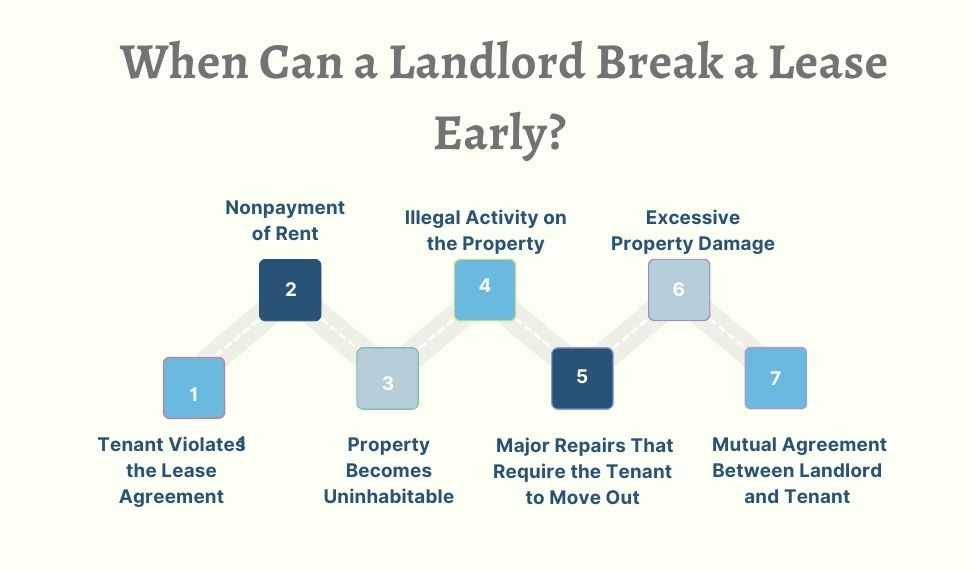
As a landlord, you cannot usually end a lease whenever you want because it is a legally binding commitment that typically favors the tenant’s right to possession. However, there are several specific, legally recognized scenarios where a property owner can intervene and terminate the agreement before its agreed termination date outlined in the lease. Below are the most common and legally accepted reasons a landlord can break a lease early:
1. Tenant Violates the Lease Agreement
When a tenant violates the terms outlined in the lease agreement, like repeatedly breaking property rules, leasing unauthorized occupants or pets, or ignoring restrictions that were clearly stated in the rental contract, they have committed a material breach that grants landlords the right to initiate termination proceedings.
In most jurisdictions, when a violation occurs, the landlord typically provides written notice, such as the 15-day Notice to Cure or Quit in Oklahoma, giving the tenant a chance to correct the issue before moving forward with termination. If the tenant continues to violate the agreement, the landlord may begin the legal process to end the lease and regain possession of the property.
2. Nonpayment of Rent
The most common and straightforward reason for terminating a lease early is the nonpayment of rent, which fundamentally breaks the financial core of the landlord-tenant relationship and allows the owner to reclaim the property to find a paying resident.
When a tenant consistently misses payments or stops paying altogether, the landlord can issue a formal notice (5-day Notice to Quit in Oklahoma) demanding payment within a specific timeframe. If the tenant does not resolve the overdue balance, the landlord may proceed with the eviction process to end the lease and recover the property.
3. Property Becomes Uninhabitable
If a rental property reaches a point where it is no longer safe or livable for a tenant, a landlord may be required or permitted to terminate the lease, and in some cases, this termination is not optional but legally mandated. Uninhabitable conditions typically include severe structural damage, significant mold growth that cannot be quickly remediated, or fire or flood damage that makes the unit unsafe to occupy.
When a property cannot fulfill the “Implied Warranty of Habitability”, landlords are generally required to provide written notice to the tenant, return any prepaid rent for the period the property was unusable, or even assist the tenant in finding temporary housing.
4. Illegal Activity on the Property
As a landlord, can you break a lease almost immediately if you can prove that a tenant or their guests are engaging in illegal activities on the premises, like drug-related offenses, violent behavior, or other criminal conduct that threatens the safety of neighbors or the surrounding community.
Because these situations can create serious liability risks for property owners, landlords typically act quickly by issuing termination notices and beginning legal proceedings to remove the tenant from the property.
5. Excessive Property Damage
Excessive property damage beyond normal wear and tear, such as large holes in the walls, smashed windows, or significant pet-related destruction, constitutes a serious breach that affects the safety, value, and livability of the property, which justifies early termination.
Depending on local landlord-tenant laws and the terms written in the lease agreement, the tenant may be given a short period to repair the damage or correct the problem. If the tenant refuses or the damage is too severe to reasonably fix while they remain in the property, the landlord may move forward with terminating the lease.
6. Mutual Agreement Between Landlord and Tenant
A lease can also end when both the landlord and the tenant mutually agree to terminate the agreement before the scheduled end date, when circumstances change for either party. For example, a tenant may need to relocate for a new job, move closer to family, or deal with unexpected financial challenges that make staying in the rental difficult. At the same time, a landlord may be open to ending the lease early if they plan to renovate the property, sell it, or bring in a new tenant.
When this happens, both parties should sign a written mutual termination agreement that clearly states the agreed move-out date, the condition in which the property must be returned, and how the security deposit will be handled.
7. Major Repairs That Require the Tenant to Move Out
Sometimes, landlords need to end the lease because of repairs or renovations that are so extensive that the tenant simply cannot remain in the property while the work is being done. Large structural repairs, foundation problems, extensive plumbing replacements, electrical system upgrades, or significant safety improvements can make it impossible for contractors to work safely while the property is occupied.
Depending on local housing laws and the lease agreement, tenants may receive advance notice, alternative accommodation during the repair, or the opportunity to return after the repairs are completed.
When a Landlord Cannot Break a Lease Early?
A landlord cannot break a lease without a legally valid reason because a lease agreement functions as a binding contract that protects both the property owner and the tenant. Once the lease is signed, it’s your duty as a landlord to honor the agreed rental period unless the tenant violates the contract or other legal circumstances allow termination. Here are the situations where a landlord has no legal right to end a lease early, regardless of how reasonable their personal reasons might seem.
Wanting to Change Higher Rent
A landlord cannot end a fixed-term lease simply because you believe you could be earning more rent from a different tenant or because the market has shifted in your favor since the lease was signed. The rent amount is locked in for the duration of the lease term, and attempting to force a tenant out to re-list the property at a higher rate is not only legally invalid as a reason for termination. As long as the tenant continues paying rent on time and follows the rules outlined in the lease, they generally have the legal right to remain in the property until the lease term officially ends.
Wanting to Sell the House Quickly
As a landlord, you cannot break a lease just because you want to sell the property quickly or prefer to transfer ownership without tenants living in the home. In most situations, when a rental property is sold while a lease is still active, the lease agreement transfers to the new owner along with the property itself, meaning the buyer must typically honor the existing rental terms until the lease expires. If you need the property vacant before the lease ends, you need to negotiate a voluntary early termination with the tenant that compensates them fairly for leaving ahead of schedule.
No Legitimate Cause
Breaking a lease without legitimate legal cause is not allowed because the lease agreement represents a formal contract that establishes clear rights and responsibilities for both the landlord and the tenants throughout the rental period. If a landlord attempts to terminate the lease simply because they changed their mind, no longer want to rent the property, or prefer a different tenant without any valid justification, the action may be considered wrongful termination under many landlord-tenant laws.
Retaliation or Discrimination
Landlords are prohibited from terminating a lease as a form of retaliation or discrimination against the tenant since housing laws protect tenants from unfair treatment and biased housing decisions. Retaliation occurs when a landlord tries to remove a tenant after the tenant reports maintenance problems, files a housing complaint, or requests necessary repairs. Discrimination involves ending a lease based on protected characteristics under the Fair Housing Act, such as race, religion, gender, disability, family status, or national origin, exposing landlords to fines, damages, and legal implications for biased actions.
How to Break a Lease Early?Legal Step-by-Step Guide
Breaking a lease as a landlord requires careful planning to protect yourself legally, reduce the chances of disputes, and get the best possible outcome for your situation. Here is a step-by-step way to break a lease correctly:
Step 1: Review the Lease Agreement Carefully
First, the landlord needs to carefully review the lease agreement to understand the specific terms that govern early termination, notice requirements, potential penalties, violation remedies, and any special provisions like military clauses or sale of property that might apply to your situation. By reading these sections thoroughly and referring to the local laws, landlords can identify whether the lease already provides a clear process for ending the agreement early, which helps prevent mistakes that could lead to legal disputes or financial complications later.
Step 2: Identify Valid Legal Grounds
After reviewing the lease, landlords need to determine whether you actually have a legally valid reason to terminate the lease. Landlord-tenant laws require a legitimate cause to break a lease before its scheduled end date, especially when one party does not agree with the decision. Valid grounds may include tenant lease violations, failure to pay rent, unsafe living conditions, significant property damage, or other circumstances recognized by local housing regulations. Confirming that a legitimate reason exists helps ensure the termination process is legally defensible if disagreements arise.
Step 3: Deliver Proper Written Notice
Landlords must deliver a formal written notice to the tenant in the manner required by the state landlord-tenant laws before the agreement can be terminated. A lease termination notice typically explains the reason for the termination, the timeline for moving out or resolving the issue, and any relevant details related to the lease agreement. The notice must be delivered via certified mail with a return receipt requested to provide evidence of written communication.
Step 4: Negotiate a Termination Agreement
In situations where both parties are open to ending the lease early, negotiating a mutual termination agreement can be one of the most practical solutions. This could involve offering a cash-for-keys arrangement where the tenant agrees to vacate by a specific date in exchange for financial compensation, waiving certain fees or deposit deductions, or simply giving the tenant more time to find new housing than the law strictly requires. A written mutual termination agreement signed by both parties provides clean legal closure, eliminates the risk of future claims, and almost always resolves the situation faster than going through the courts.
What Happens When a Landlord Breaks a Lease Early Without Legal Reasons?
Attempting to terminate a lease for personal convenience or financial gain without a valid legal “just cause” is a high-risk move that can lead to severe judicial and financial consequences.
Lawsuits for Breach of Contract
If a landlord breaks a signed lease without legal justification, the tenant may file a breach of contract lawsuit because the agreement clearly outlines the responsibilities and time commitments both parties agreed to follow. When the contract is violated, tenants may seek compensation for financial losses such as moving costs, increased rent at a new property, temporary housing expenses, or other damages caused by the early termination of the lease agreement.
Wrongful Eviction Claims
A landlord who forces a tenant to leave without following proper legal procedures may face a wrongful eviction claim, especially if the tenant is pressured to move out without the required notices or court involvement. Evictions normally require a formal legal process according to the state eviction laws, and landlords who attempt to bypass that process by locking tenants out, removing belongings, or shutting off utilities may face legal penalties and financial liability.
Security Deposit Problems
Terminating a lease early can also create disputes over the tenant’s security deposit, particularly if the landlord withholds the deposit without a clear legal reason connected to damages or unpaid rent. Tenants may argue that the deposit should be fully returned because the landlord initiated the early termination, and if the deposit is not returned according to legal timelines, the tenant may pursue legal action.
Insurance Complication
Improperly breaking a lease may also create complications with landlord insurance policies, especially if legal disputes arise or tenants file claims related to wrongful eviction or property access issues. Insurance providers often review whether the landlord followed proper procedures and complied with housing laws, and if the termination violated the lease agreement or legal requirements, certain claims or liability protections may become more difficult to resolve.
Navigate Lease Termination Legally With OKC Home Realty Services
A landlord can break a lease but only when there is a legally valid reason, such as nonpayment of rent, lease violations, illegal activity, excessive property damage, or an uninhabitable property. However, a landlord generally cannot terminate a lease early simply to raise rent, sell the property quickly, remove a tenant without cause, or retaliate against a tenant, as these can trigger serious legal and financial consequences. Typically, the termination process involves reviewing the lease terms carefully, identifying a valid legal reason for termination, providing proper written notice, and negotiating a termination agreement with the tenant.
If you are unsure whether you can legally terminate a lease, getting professional guidance can prevent costly legal mistakes. OKC Home Realty Services helps property owners handle lease agreements, tenant issues, legal notices, and lease terminations the right way.
Confused about your current lease situation? Contact us to get a free consultation to review your specific lease terms, identify any valid termination grounds, and map out a compliant action plan that avoids lawsuits or eviction pitfalls.
FAQs: Can a Landlord Break a Signed Lease?
Can a landlord break a lease to sell the property?
A landlord cannot break a fixed-term lease simply to sell the property, as this would breach the binding contract. The landlord must either honor the full lease term or negotiate an early termination agreement with the tenant’s consent, such as offering a buyout.
Can a landlord break a lease during winter?
Yes, a landlord can break a lease during winter, but they must follow legal procedures, including proper notice and valid reasons.
Can a landlord enter too often to push a tenant out?
A landlord cannot enter the property too often to harass or push a tenant out, as state law requires at least 24 hours’ written notice for non-emergency entries at reasonable times. Excessive entries without a legitimate purpose violate the tenant’s right to quiet enjoyment and could result in legal claims against the landlord.
What if the property is foreclosed?
If a property is foreclosed, the tenant’s existing lease does not automatically terminate, and they retain rights under federal law (often 90 days’ notice from the new owner). The original landlord can still collect rent until the foreclosure auction, but tenants should review their lease for any specific clauses.
Can a landlord terminate a lease remotely?
Yes, a landlord can initiate lease termination remotely by sending proper written notice through legally accepted methods such as certified mail or electronic delivery, if allowed by the lease, but legal procedures must still be followed.
Can a landlord break a lease for noise complaints?
Yes, a landlord can terminate a lease for repeated noise complaints if they violate lease terms or local ordinances. However, the landlord must document the violations and usually provide notice with an opportunity to correct the behavior.