



If you are a landlord dealing with a problem tenant, you might wonder: Can a property manager evict a tenant on behalf of the landlord? Yes, a property manager can initiate eviction procedures to recover possession of the rental property if they are authorized by the property owner and follow local landlord-tenant laws. The property manager acts as the landlord’s authorized agent based on a signed property management agreement that allows the manager to serve notices, document violations, and begin the eviction process. However, the manager cannot personally remove a tenant from the property without a court order issued through the legal eviction process.
As a property manager with over 20 years of experience, I help landlords avoid unlawful eviction claims and procedure errors by ensuring legal compliance, documentation, and court-approved possession recovery. In this blog, I’ll walk you through the legal authority a property manager holds, the valid grounds for eviction, the exact process for lawful eviction, and why working with an experienced property management team to manage an eviction situation is the smartest way to protect you legally
What Authority Does a Property Manager Have?
A property manager operates as the authorized representative of a property owner, which means many landlord responsibilities can legally transfer to the manager through a formal agreement. This authority allows the manager to handle day-to-day operations, tenant communication, lease enforcement, and, in some cases, the initiation of eviction procedures when a tenant violates lease terms. However, the extent of this authority depends on the management contract and the local landlord-tenant laws governing rental properties.
Acting on Behalf of the Landlord
A property manager acts under an agency relationship, which means the manager represents the landlord in business and legal matters related to rental property. In legal terms, the landlord becomes the principal, while the property manager serves as the agent authorized to make decisions, enter into agreements, and take binding actions directly on the owner’s behalf within the scope of their agreed authority.
Because of this agency relationship, property managers can communicate with tenants regarding payment obligations, respond to complaints or maintenance requests, document lease violations, and deliver formal notice when required. The delegated authority helps landlords avoid direct involvement in day-to-day tenant issues while ensuring the property continues to operate according to established legal and contractual standards. For example, if a tenant breaches the lease, the manager, as the authorized agent, can issue formal warnings and legal notices that carry the same weight as if the owner had sent them personally.
Property Management Agreements
A property management agreement is a legal document that formally defines the authority of a property manager, determining what a manager can and cannot do on the landlord’s behalf, including whether they can initiate eviction proceedings. It typically outlines operational responsibilities, compensation structure, reporting requirements, and legal permission granted to the manager for handling tenant-related matters.
From an eviction standpoint, the property management agreement must specifically authorize the manager to act as the owner’s legal agent in “Forcible Entry and Detainer” or unlawful detainer actions. Most comprehensive agreements include “Limited Power of Attorney” or an “Agency Appointment” section, which empowers the manager to:
- Sign notices: Legally deliver notices to vacate the property in the owner’s name.
- Hire Counsel: Retain a landlord-tenant attorney on the owner’s behalf to handle contested cases.
- Execute Settlements: Negotiate “Cash for Keys” or move-out agreements without needing the owner’s signature for every minor revision.
- Act as a Witness: Testify regarding ledger accuracy and lease violations in court.
The property management agreement protects you, the landlord, and us property managers by clearly defining the limits of authority, which ensures eviction actions follow proper legal procedures instead of informal removal attempts.
Responsibilities in Tenant Management
Tenant management is one of the most important operational areas within professional property management because it directly affects rental income stability, lease compliance, and overall property performance. A property manager typically handles a wide range of responsibilities on behalf of the landlord, which allows property owners to maintain consistent property operations without managing daily tenant interactions themselves.
Rent Collection
Property managers are responsible for collecting monthly rent, maintaining detailed financial records, and monitoring payment timelines to quickly identify late or missed payments that could require formal notices. Managers maintain a predictable cash flow through consistent rent collection using automatic rent collection systems, digital portals, and documented payment histories to avoid nonpayment that could lead to evictions.
Lease Enforcement
The property manager ensures tenants follow the conditions outlined in the lease agreement, including occupancy limits, maintenance responsibilities, noise policies, and property usage restrictions. When violations occur, the manager documents the issue and communicates with the tenant to resolve the matter while maintaining legal compliance.
Issuing Notices
Property managers also handle official tenant notices, which may include late rent notices, lease violation warnings, or compliance requests that often serve as the first formal step before legal action begins.
Can a Property Manager Legally Evict a Tenant?
Yes, a property manager has the legal authority to evict a tenant on behalf of the landlord, provided that they are authorized by a management agreement and comply with the state landlord-tenant laws. This authority allows the manager to serve formal eviction notices, document lease violations, and communicate with tenants regarding non-compliance, ensuring that all preliminary steps are handled properly before legal action begins. While property managers can handle all administrative and procedural aspects of eviction, they cannot physically remove a tenant or take actions outside the legal framework, as self-eviction is prohibited and can expose both the landlord and manager to legal liability.
When a Property Manager Can Start Eviction
An authorized property manager should have a legally recognized ground for eviction that is clearly documented and supported by evidence before initiating the eviction proceedings. The four most common and legally defensible grounds a property manager can evict a tenant on in most states, including Oklahoma, are:
Non-Payment Of Rent
Non-payment of rent is the most frequent reason for initiating eviction, as it directly impacts the landlord’s income and violates the lease agreement. A property manager monitors rent payments, issues late notices, and tracks overdue accounts in a documented system. If the payment isn’t received by the end of the state-mandated grace period, the manager is authorized to issue a formal notice like the 5-Day Notice to Pay or Quit in Oklahoma. The tenant then has five days to pay the full outstanding balance or vacate voluntarily; if neither happens, the property manager can file a Forcible Entry and Detainer action.
Lease Violations
Tenants who repeatedly breach lease terms, such as having unauthorized pets, subletting without permission, causing excessive noise, or ignoring property rules, can trigger eviction proceedings. Property managers document each violation and issue a “Notice to Cure or Quit”, giving the tenant time to correct the violation and vacate if the issue remains unresolved. If the violation persists, the notice escalates to an “unconditional quit” followed by court proceedings, where managers use photographs and written notes gathered during routine property inspections as evidence.
Property Damage
When a tenant causes damage to the rental property that goes beyond normal wear and tear, that damage constitutes a material breach of the lease agreement and gives the property manager valid legal grounds to begin eviction proceedings on the landlord’s behalf. Damages caused by the tenant’s negligence, such as punching holes in walls, causing severe stains, or allowing excessive clutter to accumulate, allow the property manager to issue a notice demanding repairs or cleanup within a specific timeframe. If the tenant fails to comply, the manager can start the eviction process backed by documented evidence.
Illegal Activity
Engaging in illegal activity on the property, such as drug-related offenses, theft, or other criminal behavior, is a serious lease violation that often justifies immediate eviction. The state law permits property managers to proceed with the eviction process without serving a prior notice period and the usual opportunity to cure before filing the eviction lawsuit.
When Only the Landlord or Court Can Evict
Even if a property manager handles most of the eviction process, only the court has the legal power to actually remove a tenant from a rental property. In most states, including Oklahoma, a tenant cannot be forced out without going through the formal legal process and waiting for the court to review the situation before any removal can happen.
One important thing to consider is that self-eviction is illegal in most states, which means landlords and property managers cannot attempt to remove tenants by taking matters into their own hands or using pressure to force them out of the property. Actions such as changing the locks, shutting off water or electricity, blocking access to the home, removing tenant belongings, or threatening the tenant to leave are considered unlawful eviction practices and can lead to serious legal consequences, including fines, lawsuits, or liability for damages.
Instead, the eviction must move through the court system, where the judge reviews the documentation, the lease agreement, the payment records, and violation notices before deciding on whether the eviction request is legally justified. Once the judge signs that order, the local law enforcement, usually the sheriff, has the authority to carry out the final removal of the tenant, not the property manager.
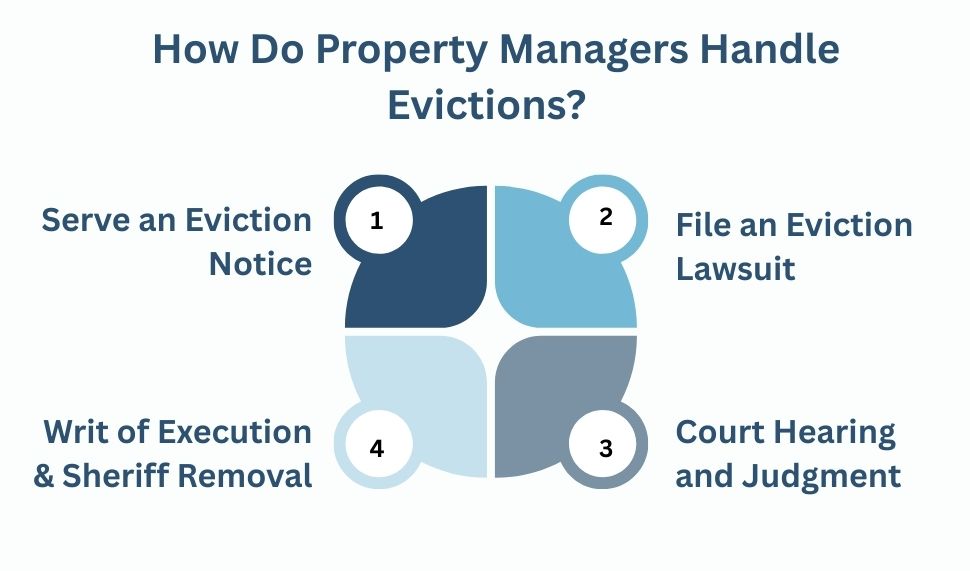
How Do Property Managers Handle Evictions? Step-By-Step Process

Property managers follow a structured legal process when handling evictions to ensure every step complies with state landlord-tenant laws and court requirements. Instead of removing a tenant directly, managers handle the administrative, documentation, and legal coordination aspects of the eviction on behalf of the landlord while the court supervises the final decision. Following the state-specific eviction laws and process helps protect landlords from unlawful eviction claims and ensures tenants receive proper notice and legal rights during the procedure. While specific timelines vary by state or city, most eviction cases follow a similar sequence that begins with a formal notice and ends with court-authorized removal if the tenant does not resolve the issue.
Step 1: Serve an Eviction Notice
The eviction process begins when the property manager serves a formal eviction notice to the tenant through certified mail, explaining the lease violation and the action required to fix it. How much notice to give the tenant to move out depends on the type of violation, which could be:
| Reason | Notice Type | Timeframe |
| Non-payment of rent | Pay or Quit | 3 – 5 days |
| Lease violations | Cure or Quit | 15 days (10 to cure) |
| Property damage | Cure or Quit | 15 days (10 to cure) |
| Illegal activity | Immediate/Unconditional Quit | 24 hrs – 5 days |
Step 2: File an Eviction Lawsuit
If the tenant fails to pay, cure the violation, or vacate voluntarily within the notice period, the property manager files a Forcible Entry and Detainer action at the district court where the rental property is located. This filing formally starts the legal eviction case and includes documentation such as the lease agreement, payment records, and proof that the required notice was served. After the case is filed, the court schedules a hearing and sends a summons to the tenant, informing them about the legal action and the date they must appear in court to respond.
Step 3: Court Hearing and Judgment
During the court hearing, both the property manager ( acting on the landlord’s behalf) and the tenant have the opportunity to present evidence and explain their side of the dispute. The property manager provides documents such as the lease agreement, payment records, communication history, and copies of eviction notices to show that the tenant violated the lease terms. After reviewing the evidence, if the court rules in favor of the property manager, the judge issues a judgment for possession, giving the legal right to reclaim the property.
Step 4: Writ of Execution & Sheriff Removal
If the tenant refuses to leave by the court-ordered deadline, the manager must request a Writ of Execution (or Writ of Restitution), which directs the county sheriff to physically remove the tenant. The sheriff will post a notice giving the tenant a final window to leave voluntarily before showing up to enforce the removal and restore the possession of the property to the landlord.
Why Landlords Use a Property Manager for Evictions Management
Many landlords choose to work with a property manager when dealing with evictions because the process involves legal procedures, strict documentation requirements, and direct communication with tenants. Managers leverage industry-standard tools and deep knowledge of the local statutes to ensure the efficient recovery of your property without legal implications. Here are the four main reasons why, as a landlord, you should use property managers for eviction management:
Legal Compliance and Documentation
Eviction laws require strict compliance with notice periods, filing procedures, and documentation standards, which is why many landlords rely on property managers to manage these legal details. A property manager carefully tracks lease agreements, rent payment records, violation notices, and communication history with tenants, which is essential evidence useful in court. According to Buildium’s 2026 report, the demand for professional oversight is surging, with 33% of rental owners citing “compliance with local regulations” as their primary reason for hiring a manager.
Reduced Legal Risk for Landlords
Property managers act as a legally informed buffer between the landlord and the tenant, ensuring that every action taken is defensible in court and compliant with both state law and federal Fair Housing regulations. By managing notices, court filings, and communication carefully, property managers help landlords avoid costly legal liability issues like wrongful evictions.
Faster and More Efficient Process
Property managers move the eviction process forward more efficiently than DIY landlords because they are familiar with the legal procedures, paperwork requirements, and court timelines involved in eviction cases. Their experience allows them to prepare notices correctly, gather supporting documents quickly, and coordinate with attorneys or clerks without delays. This expertise often shortens the overall timeline, which minimizes vacancy losses.
Professional Tenant Communication
Property managers act as an experienced intermediary between the landlord and the tenant, handling conversations about rent payments, lease obligations, and legal notices in a calm and structured manner. This professional approach helps reduce conflict, prevents personal disputes between landlords and tenants, and ensures that all communication remains focused on resolving the issue according to the lease agreement and applicable housing laws.
Work with OKC Home Realty Services to Handle Evictions the Right Way
A property manager can evict a tenant on behalf of the landlord, but only when the manager has authorization through a property management agreement and follows the proper eviction procedures required by the state and local landlord-tenant law. By acting as the landlord’s agent, the property manager serves formal notice, documents lease violations, files an eviction case with the court, and obtains a legal judgment before the tenant can be removed from the property.
Because eviction laws include strict notice requirements and court procedures, landlords must follow every step carefully to avoid delays, legal disputes, or claims of unlawful eviction. This is where professional property management like OKC Home Realty Services comes in. Our experienced team of property managers acts on behalf of landlords across the Oklahoma City metro area to handle every stage of the eviction process so that you never have to navigate landlord-tenant laws alone or risk a costly procedural mistake. We have spent over 20 years protecting landlords from legal exposure by bringing that same depth of experience to every case we manage.
Want to be free from eviction hassle? Contact us today and let our team recover possession of your property the right way, on the right timeline, and with your investment fully protected.
FAQs: Can a Property Manager Evict a Tenant
Can a property manager evict a tenant if the property owner disagrees?
No. Since the property manager acts as the owner’s legal agent, the owner typically holds the ultimate authority. However, many Property Management Agreements grant the manager the right to handle day-to-day legal enforcement independently. If a disagreement arises, the specific terms of your contract will determine who has the final say.
Do property managers need a power of attorney to evict?
Property managers do not always need a power of attorney to evict a tenant, as most rely on clear agency clauses in the property management agreement for serving notices and filing suits, although some contracts add a limited Power of Attorney specifically for court-related steps.
How long does the eviction process take when managed by a property management company?
The eviction process managed by a property management company typically takes 30-45 days from initial notice to sheriff removal, which is faster than the 60+ days for DIY landlords due to their expertise in filings and securing default judgments, though contested cases may extend to 60-90 days.
Can a property management company represent a landlord in eviction court?
A property management company can represent a landlord in eviction court by attending hearings and presenting evidence as the authorized agent, but they cannot provide legal representation like a licensed attorney in contested or complex matters.
Do property managers need permission to evict a tenant?
Property managers need explicit written permission in the management agreement to evict a tenant, without which they lack the legal standing to serve notices or file eviction lawsuits, often resulting in case dismissal.