



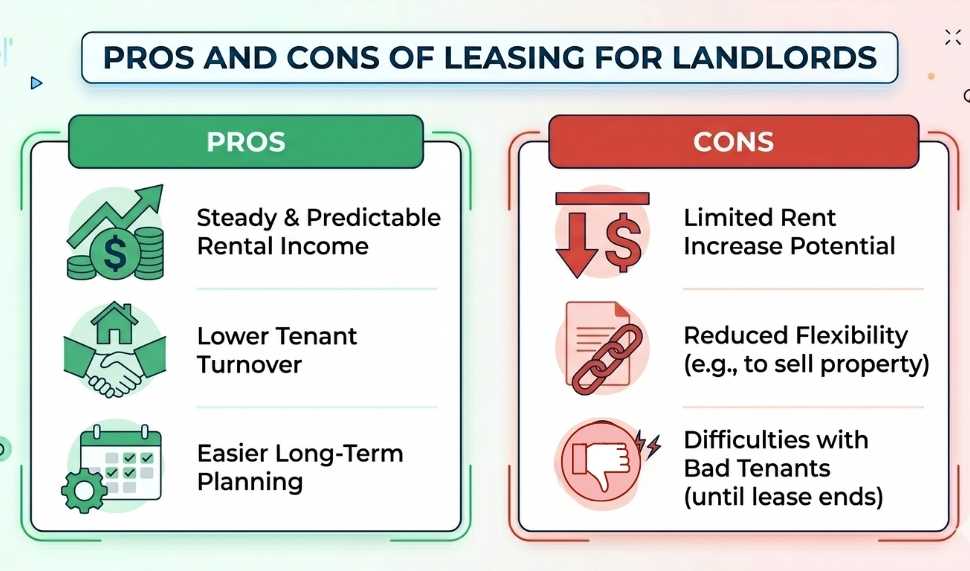
When it comes to protecting your cash flow, understanding the foundational legal and operational distinctions of lease vs rent is an important decision. Many landlords use these terms interchangeably, but they’re actually two distinct legal agreements that can significantly impact your rental income and property management strategy. When comparing lease vs rent, the main difference comes down to commitment, flexibility, and how much control you want over your rental property. A lease agreement usually locks both parties into a fixed term, while a rental agreement often operates on a month-to-month basis.
A fixed-term lease can provide predictable income and reduce turnover, while a month-to-month rental agreement can give you more flexibility to adjust rents or respond to changing market conditions. The right option depends on your investment goals, property type, local demand, and management strategy.
In my 20+ years as a property manager, I’ve helped hundreds of landlords navigate the difference between lease and rent to make the right choice for their investment properties and avoid costly legal mistakes. In this blog, I’ll break down the major differences between lease and rent and share my practical insights as an experienced property manager to help you understand which option protects your investment better.
What Is a Lease Agreement?
A lease agreement is a legally binding contract that locks in a tenant to occupy your property for a specific, fixed period, most commonly 6-12 months. During the lease term, the rent amount and other key conditions generally remain unchanged unless both parties agree to a modification. The tenant pays rent monthly but cannot move out early without paying a penalty, and you cannot raise the rent or ask the tenant to leave unless they break the lease terms.
Key lease components:
- Specific start and end dates
- Fixed monthly rent amount
- Security deposit terms
- Property rules (pets, smoking, alterations)
- Maintenance responsibilities
- Renewal procedures
What Is a Rental Agreement?
A rental agreement is a short-term contract that establishes a flexible arrangement, typically operating on a month-to-month basis rather than a long-term commitment. Unlike a lease, the terms aren’t locked in for a fixed period, which means you can adjust the rent, update your policies, or end the tenancy with proper written notice. The agreement automatically renews at the end of every 30 days unless either party provides proper written notice to terminate it.
Key components of a rental agreement:
- Monthly automatic renewal
- Notice requirements for termination
- Current monthly rent rate
- Security deposit details
- Property use rules
- Rent adjustment procedures
What Is the Difference Between a Lease and a Rental Agreement?
The difference between a lease and a rental agreement primarily relates to the length of the agreement, flexibility, rent adjustments, and tenant stability. A lease typically fixes rent and key terms for a defined period, while a rental agreement runs month-to-month and lets you adjust rent or terminate with a notice. Both are legally binding contracts, but they serve completely different landlord strategies. Here are the key differences that matter most to property owners.
Length of the Agreement
The most fundamental difference between leasing and renting is how long the agreement runs. A lease sets a defined start and end date, usually 6 to 12 months, and both parties are legally bound to those dates from the moment they sign. You can’t shorten it, and your tenant can’t walk away from it without consequences.
A rental agreement, on the other hand, has no fixed end date. It simply renews itself every month until either you or your tenant decides to end it. Tenants can move out anytime, and landlords can also end the tenancy, but it’s critical to know how much notice to give a tenant to move out under the state landlord-tenant law to avoid legal issues.
Flexibility
A lease provides stability but limits a landlord’s ability to make changes during the lease term. The rent is fixed, the rules are set, and neither party can make significant changes until the term expires or both sides agree in writing. If your costs go up mid-lease, you’re absorbing that difference until renewal comes around.
A rental agreement offers more flexibility because terms can often be updated with the required notice period. You can adjust the rent to reflect market changes, update your pet policy, or add new terms at each renewal cycle.
Rent Control and Adjustments
During a lease term, the rent amount is locked in and cannot be changed, even if market rates go up significantly. This protects tenants from unexpected increases while providing landlords with predictable income throughout the lease term.
With a month-to-month rental agreement, landlords can raise the rent as long as they follow the notice requirements as per the law. This lets you adjust to market conditions quickly and capture higher rents when demand is strong.
Tenant Stability and Turnover
A lease is a commitment; your tenant is agreeing to stay for the full term, which significantly reduces the chance of an unexpected vacancy mid-year. That stability lowers your turnover costs, meaning less money spent on re-listing, cleaning, showing the property, and screening new applicants.
Month-to-month rental agreements have significantly higher turnover risk since tenants can leave anytime with just a written notice. You will spend significantly more time and money on cleaning, marketing, and leasing fees to fill vacancies and manage turnover.
Income Predictability
With a fixed-term lease agreement, landlords know exactly how much rent is coming in every month for the entire term, which makes it far easier to plan for mortgage payments, maintenance costs, property taxes, and any unexpected expenses.
Rental agreements make your income much less predictable because tenants can leave anytime with short notice, creating unexpected vacancy gaps that leave your property empty and earning nothing. Even if you raise rent to match market rates, you might lose tenants faster, and the constant turnover means you can’t count on consistent monthly income.
Termination and Renewal Procedures
Ending a lease requires waiting out the entire length of the contract or proving a severe structural violation, and once it approaches its final month, it demands an explicit renewal negotiation to keep the tenant in place legally.
Rental agreements are much easier to end since either party can terminate with a written notice for any reason (as long as it’s not discriminatory). This gives you an exit strategy if a tenant becomes problematic or if you decide to sell the property.
Lease vs Rent Agreement: Quick Comparison for Property Owners
| Factor | Agreement | Rent Agreement |
| Term Length | Fixed term (typically 6–12 months) | Month-to-month |
| Rent Increases | Not allowed during the lease term | Allowed with proper notice |
| Tenant Stability | Higher stability and lower turnover | Lower stability and higher turnover |
| Landlord Flexibility | Limited until lease expiration | High flexibility |
| Income Predictability | More predictable cash flow | Less predictable cash flow |
| Vacancy Risk | Lower risk of unexpected vacancies | Higher risk of turnover |
| Termination | Requires lease expiration or legal cause | Can end with proper notice |
What are the Pros and Cons of Leasing?
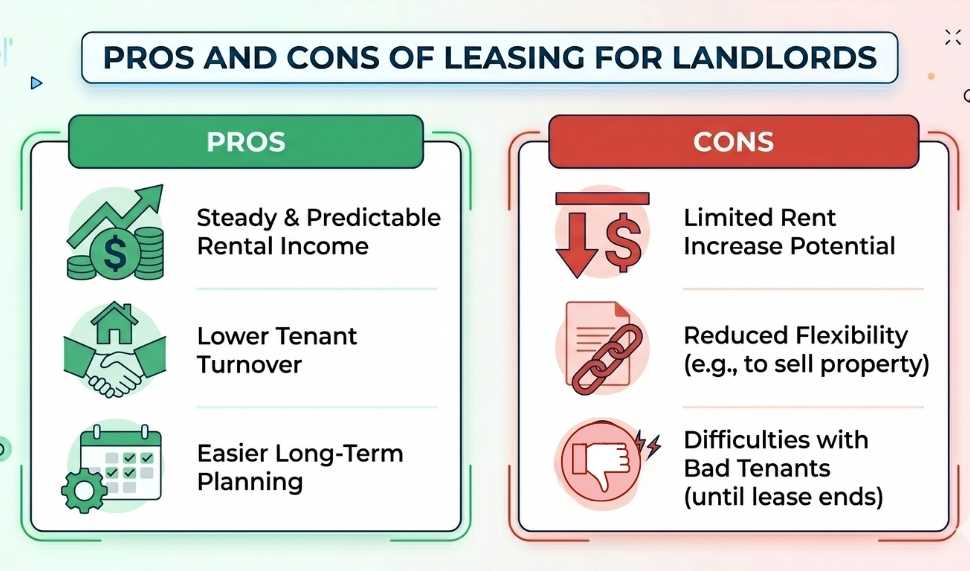
Leasing offers landlords a structured approach to property management by locking tenants into a fixed-term agreement. This arrangement can create stability and predictable income, but it also limits flexibility when market conditions change. Before choosing a lease agreement, it is important to understand both the advantages and disadvantages from an investment perspective.
What are the Benefits of Leasing for Landlords?
A lease agreement offers several advantages for landlords who prioritize stability, predictable cash flow, and long-term tenant occupancy.
Steady and Predictable Rental Income
When a tenant signs a lease, they’re committing to pay the same rent every month for the duration of the agreement. Because the tenant commits to a fixed term, landlords can forecast cash flow more accurately and budget for mortgage payments, maintenance expenses, insurance costs, and property taxes without worrying about unexpected vacancies.
Lower Tenant Turnover
Fixed-term leases encourage longer tenant occupancy, which encourages tenants to take better care of the space. It directly reduces what you spend on vacancy-related costs like relisting fees, cleaning, touch-up repairs, and the time it takes to screen and onboard a new tenant. Even one extra month of occupancy per year adds up significantly over a portfolio of properties.
Easier Long-Term Planning
When you know a tenant is locked in for 12 months, you can make smarter decisions about the property, like scheduling larger maintenance projects, refinancing, or planning improvements without worrying about a vacancy disrupting your timeline. That planning horizon also makes it easier to evaluate whether a lease renewal makes sense or whether you want to adjust terms before the next cycle begins.
What are the Drawbacks of Leasing for Landlords?
Leasing a house comes with some disadvantages, like limited flexibility, restricted rent increases, and potential challenges when tenants want to leave before the lease expires.
Limited Ability to Raise Rent
Once a lease is signed, landlords generally cannot increase rent until the lease term ends. If market rents rise significantly during the lease period, property owners may miss opportunities to maximize rental income until the renewal process begins. In a rising market like Oklahoma City, where the rent increased by 2.6%, that locked rate can cost you real money over the course of a year.
Less Flexibility to Adjust Property Terms
If your situation changes and you want to move back into the property, sell it, renovate it, or update your rules around pets or parking, a lease limits your ability to act until the term expires. You’re legally obligated to honor the agreement even when your own plans shift, and that lack of flexibility can feel limiting depending on how actively you manage your portfolio and how quickly your investment strategy evolves.
Difficult to Remove Problem Tenants
Once a lease is signed, removing a tenant who isn’t paying, is damaging the property, or is violating terms requires following a formal legal process; you can’t simply ask them to leave. The early termination of a lease agreement process is rarely quick or simple. It requires documented notices, waiting periods, and potentially filing for eviction through the courts, which takes time and money.
What are the Pros and Cons of Renting?
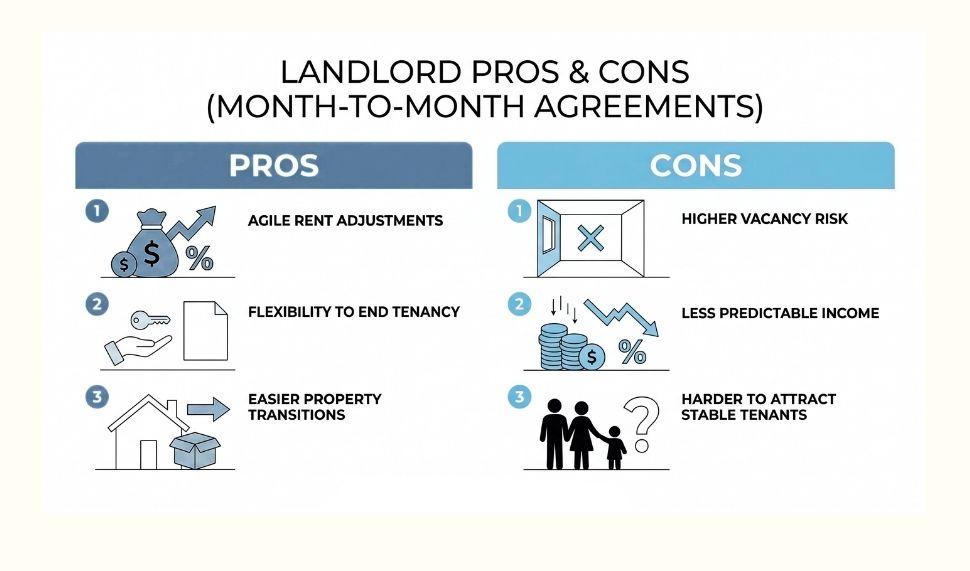
Renting through a month-to-month rental agreement gives landlords more flexibility than a fixed-term lease. It allows you to respond quickly to market changes and property needs, but it can also increase turnover and vacancy risk.
What are the Benefits of Renting for Landlords?
The main benefits of renting are flexibility, quicker rent adjustments, and greater control over tenancy decisions. These advantages can be valuable for landlords who want to respond quickly to market changes or keep their options open.
Agile Rent Adjustments
Operating on a rolling thirty-day cycle gives you the unique legal right to raise your rents frequently to match real-time market demand. If property taxes spike or localized neighborhood demand suddenly surges, you do not have to wait out a long annual contract; you can simply issue a proper written notice to adjust the monthly rate and maximize your immediate cash flow returns.
Full Flexibility to End the Tenancy
Dealing with an uncooperative, disruptive, or late-paying occupant is significantly easier under a flexible rental agreement framework. Instead of building an expensive, drawn-out legal case for a lease violation or enduring a messy eviction lawsuit, you can quietly utilize your exit strategy by serving a notice to terminate the tenancy.
Easier to Transition the Property
If you’re planning to sell the property, move back in, renovate, or shift your investment strategy, a month-to-month rental agreement makes that transition far smoother. A short-term rental contract keeps your real estate assets highly liquid and ready for sudden strategic adjustments.
What are the Drawbacks of Renting for Landlords?
The major disadvantages of renting are higher turnover, less predictable income, and a greater likelihood of vacancies, which can increase management responsibilities and reduce long-term income stability.
Higher Risk of Unexpected Vacancy
Month-to-month tenants can move out with relatively short notice, and there is nothing in the agreement that prevents that from happening at the worst possible time. Filling a vacancy during the slower rental season (late fall and winter, particularly) can take weeks longer than expected, and every empty week is income you’re not getting back.
Less Predictable Monthly Income
Rental agreements can make income less predictable because tenants are not committed to a long-term stay. That unpredictability makes it harder to plan for mortgage payments, schedule larger maintenance projects, or build reliable cash flow projections for your property. Unexpected move-outs also create gaps in occupancy and make it harder to forecast revenue throughout the year.
Harder to Attract Stable Long-Term Tenants
Properties offered exclusively on a month-to-month rental basis often fail to attract established, long-term renters who view the property as a true home. Tenants who are looking to put down roots, families, professionals relocating for work, or anyone wanting housing security will almost always prefer the commitment of a long-term lease over a month-to-month arrangement. By offering only a rental agreement, you risk filtering out exactly the kind of stable, long-term tenant who tends to take better care of the property and renew consistently.
When Should a Landlord Rent Vs Lease?
Between leasing and renting, the right choice depends on your investment goals, market conditions, and how you plan to manage the property.
When is a Month-To-Month Rental Agreement Better for Landlords?
Renting works best when you need flexibility to raise rent quickly in a hot market, especially if property values and rental rates are climbing faster than inflation. If you plan to sell the property within 1–2 years, a month-to-month agreement lets you terminate the tenancy with the required written notice and show the property vacant or with minimal tenant occupancy. This approach is ideal for short-term rentals, vacation properties, or rentals in university areas where tenant turnover is naturally high. Use this strategy if you have emergency funds to cover vacancy gaps, want to move into the property yourself soon, or manage properties where market rates change frequently throughout the year.
Renting works for landlords who prioritize control over stability and can handle income fluctuations without stressing about mortgage payments. It’s also perfect for landlords testing different rent prices to find the optimal rate before locking tenants into a longer agreement. If you’re managing multiple properties and have a strong tenant pool to draw from, month-to-month gives you the agility to adapt quickly to market conditions while maintaining maximum control over your investment decisions.
When is a Fixed-Term Lease Better for Landlords?
Fixed-term leasing is better when you want stable, predictable income to cover mortgage payments consistently every month without worrying about unexpected vacancy gaps destroying your cash flow. If you plan to hold the property for 5+ years as a long-term investment, a long-term lease creates reliable income that makes budgeting for property taxes, insurance, and maintenance much easier. It’s ideal for long-term investment properties in stable neighborhoods, landlords who rely on rental income for living expenses, or properties where finding quality tenants takes significant time and marketing effort.
It’s also the stronger choice if you want tenants who treat the home carefully since they’re committed long-term, reduce constant showings and screening hassles that drain your time, and build long-term relationships with quality renters who report maintenance issues early. If you have limited emergency funds or depend on rental income for your primary income source, the predictability of a fixed-term lease protects you from financial stress during economic downturns or slow rental markets.
How Does the Landlord-Tenant Act Impact Your Choice?
The Landlord and Tenant Act affects whether a lease or rental agreement makes more sense because it establishes the legal rules for notices, rent collection, security deposits, property maintenance, and tenancy termination. Regardless of which agreement you choose, you must comply with the requirements that apply in your state and local market.
For example, in Oklahoma, the Oklahoma Residential Landlord and Tenant Act requires landlords to give at least 30 days’ written notice before terminating the tenancy or making significant changes to the terms, including rent increases. For fixed-term leases, the rules around early termination are considerably stricter, requiring documented violations and formal notice periods before any legal action can proceed. To break a lease early, you must prove a major violation and serve formal legal warnings s, such as a strict 5-day notice to pay or quit, before you can even think about going to court.
Before deciding between renting and leasing, landlords should review the applicable landlord-tenant laws and ensure their agreements align with both their investment goals and legal obligations.
Let OKC Home Realty Services Handle Your Agreements
A lease locks tenants into a fixed 6–12 month term with no rent changes, giving you stable income and lower turnover, while renting runs month-to-month with notice requirements, letting you raise rent or terminate quickly but creating higher vacancy risk. Choosing between leasing vs renting depends on your investment goals; if you want predictable cash flow and less management hassle, go with a fixed-term lease; if you need flexibility to adapt to market changes or plan to sell soon, renting works better.
Now that you understand when to use each agreement type, you need the right legal documents and professional guidance to avoid costly mistakes. OKC Home Realty Services manages hundreds of rentals in the OKC metro and knows exactly when to use leases versus rent agreements for maximum profit. We leverage over 15 years of local property management experience to protect your investment, handle strict tenant screening, and manage agreements.
Ready to protect your investment with the right agreement? Contact us today for a free landlord consultation.
FAQs: What is the Difference Between Lease and Rent?
Is a lease and rent the same thing?
No, they are not the same thing, though people often use the terms interchangeably. The major difference is the timeline and flexibility of the contract. A lease is a long-term, fixed contract (usually 6- 12 months) where the rent price and rules cannot change until the contract ends. Renting usually refers to a short-term, month-to-month rental agreement that automatically renews every 30 days and allows for regular changes to the price or policies.
What happens when a lease expires vs a rental agreement?
When a fixed-term lease expires, the tenant must either sign a new lease or move out unless the landlord agrees to convert it to a month-to-month. If they stay without a new agreement, the law automatically converts them to month-to-month tenants with 30-day termination rights. A rental agreement, on the other hand, automatically renews every 30 days until either party gives a written notice to end it. This means rental agreements have no hard expiration date, while leases do.
Which is more profitable for landlords: long-term lease or short-term rental?
A short-term rental (like a vacation or Airbnb setup) often generates significantly higher gross revenue per night, but a long-term lease is frequently more profitable over time due to its lower operational overhead. Short-term options come with expensive cleaning fees, utility bills, management platform cuts, and drastic seasonal vacancy swings. For most everyday investors, a long-term lease provides the highest net profit because it eliminates constant turnover expenses and keeps cash flow steady.
How to transition a tenant from a lease to a month-to-month rental?
Transitioning a tenant is a straightforward legal process that usually happens in one of two ways. First, you can check your original lease for a Holding Over clause, which often states that the agreement automatically rolls over to a month-to-month cycle upon expiration if no new lease is signed. Alternatively, you can have the tenant sign a simple one-page Lease Amendment or a new month-to-month rental agreement at least 30 days before the original lease ends, clearly stating the new monthly price, the notice requirements, and any updated property rules.
What is better, leasing or renting?
Neither option is universally better; it depends entirely on your immediate real estate goals and your timeline. Leasing is better if you want a stable income, lower turnover costs, and less management hassle. It’s ideal for long-term investors holding 5+ years in stable neighborhoods. Renting (month-to-month) is better if you need flexibility to raise rent quickly, plan to sell within 1–2 years, or manage transitional properties. Choose leasing for predictability and lower stress; choose renting for control and adaptability to market changes. Your investment timeline, risk tolerance, and local market conditions should drive this decision.