

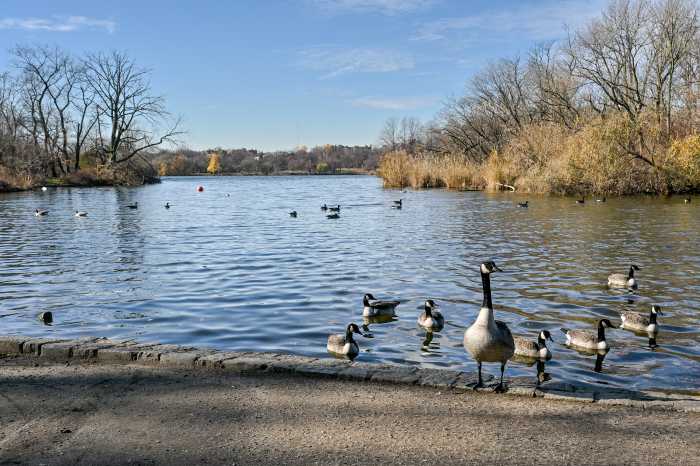
The New York City Department of Environmental Protection, NYC Parks and Prospect Park Alliance announced the completion of a $1.4 million valve upgrade at Prospect Park Lake on Tuesday. The new valve gives park staff greater control over how much water enters Brooklyn’s only lake, particularly during bouts of heavy rain.
The project is also an early piece of the city’s planned Prospect Park Bluebelt, a larger stormwater-management initiative intended to make the park and neighboring areas more resilient to flooding and extreme weather.
DEP Commissioner Lisa F. Garcia said that these upgrades “deliver real benefits for water conservation and climate resilience.”
“By giving Prospect Park the ability to control lake inflows, we’re reducing potable water use, cutting sewer overflows, and strengthening the park’s ability to prepare for heavy rain,” she continued.
The new valve replaces an aging eight-inch service line valve that supplies potable water to Prospect Park Lake and the waterfall within the park’s watercourse.
With the new system fully operational, the park is expected to use about 200,000 gallons of potable water per day — a reduction of approximately 800,000 gallons per day.
That water management will be especially important during the summer, when increased evaporation means that the lake requires additional water to maintain levels that support circulation and oxygenation. Stable water levels also help provide sufficient depth for fish and aquatic plants and limit algal blooms that can affect the lake’s appearance and smell.
The upgrade also gives Prospect Park Alliance staff the ability to temporarily stop water inflows when needed, including before major rain events.
Prospect Park Lake drains into the city’s combined sewer system at the park’s southeast corner. By limiting inflows ahead of storms, the new valve can help prevent the sewer system from becoming overwhelmed and reduce overflow reaching Gravesend Bay and the Upper Bay.
The project is expected to reduce those overflows by as much as 12 million gallons annually.
“This project is a great example of all the ways our public parks make New York City more livable, not just as beautiful places to connect with nature but also as natural infrastructure that improves quality of life for humans and wildlife alike,” said NYC Parks Commissioner Tricia Shimamura. “This underwater upgrade will pay off rain or shine, preventing sewer overflows during extreme weather and improving the health of the lake’s ecosystem during sunny summer days. This is an exciting step in our work to bring a comprehensive Bluebelt system to Prospect Park, and we look forward to working with our partners to build our sustainable future here in Brooklyn’s Backyard.”
The additional control over the lake will also reduce pressure on the Owls Head Wastewater Resource Recovery Facility, which handles wastewater and stormwater from nearly 13,000 acres of western Brooklyn.
“This project helps us steward Prospect Park’s natural areas more sustainably,” said Prospect Park Alliance President Morgan Monaco. “The ability to better manage lake levels supports our ecological goals, reduces strain on the sewer system, and complements our long-term lakeshore restoration work.”
The valve project is part of a much larger effort to rethink how Prospect Park handles stormwater.
DEP has allocated up to $50 million for the Prospect Park Bluebelt. Planned improvements include rain gardens and ponds designed to slow and filter stormwater while capturing and redirecting floodwaters.

The Bluebelt work will complement the Prospect Park Alliance’s $20 million lakeshore restoration plan, which will reconstruct the shoreline around the lake with an emphasis on environmental resilience and improving the experience for park visitors.
Together, the projects are intended to create a more coordinated system for managing stormwater while protecting the park’s ecosystem, the Prospect Park Zoo and nearby neighborhoods from increasingly extreme weather.
DEP funded and oversaw the project, while NYC Parks handled construction procurement and managed design and supervision work. The Prospect Park Alliance will assist NYC Parks with ongoing operation and maintenance.