



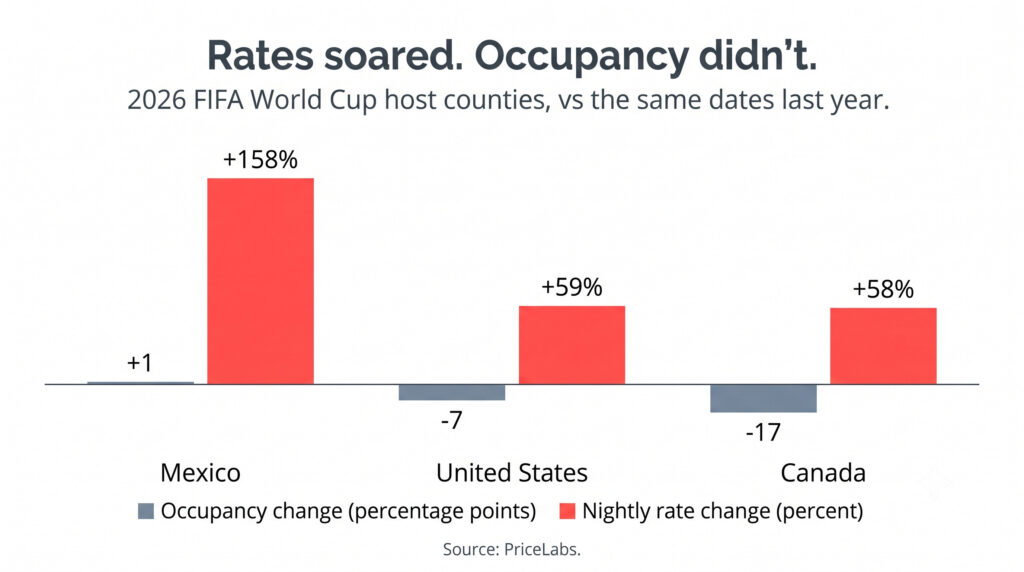
The biggest World Cup in history just ran its group stage across three countries, and in most host cities, last summer was better. In the matches played so far, short-term rental operators near the stadiums charged far more per night than a year ago while filling the same share of rooms or fewer. The first round of the 2026 FIFA World Cup has been good for revenue and disappointing for occupancy. The extra money came almost entirely from price.
Six weeks before kickoff, Rental Scale-Up reported that demand would likely disappoint, and that the cause would be the difficulty of traveling, not too many listings. The numbers back that call. Supply barely moved, up 1% in the US and 2% in Canada, so this is not an oversupply story.
Every host city charged more. Almost none filled more.
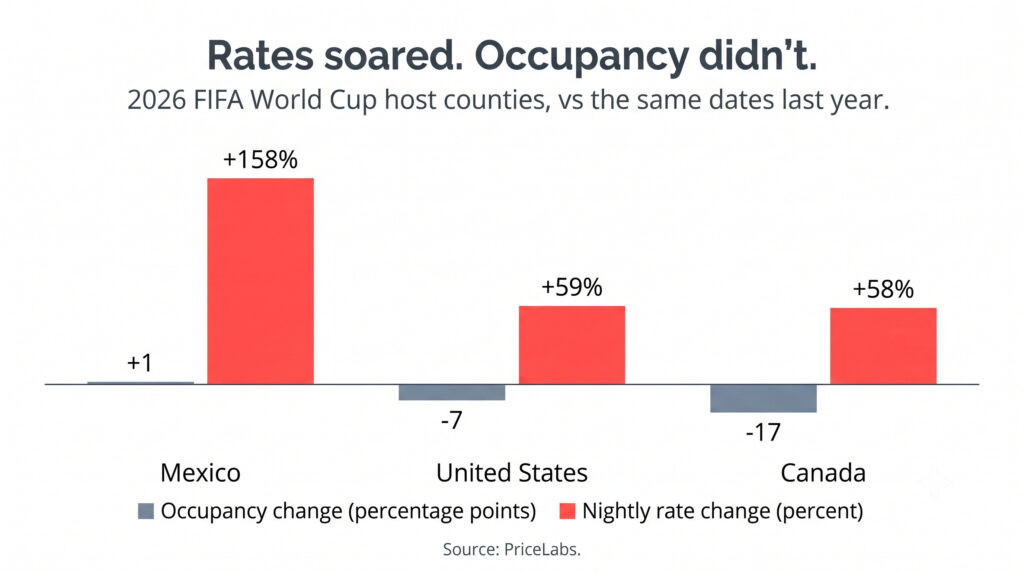
In Mexico, occupancy across the host markets was flat against last year, up a single point, while nightly rates rose 158% and revenue per listing rose 164%. In the United States, occupancy fell seven points, rates rose 59%, and revenue per listing rose 39%. In Canada, occupancy fell about seventeen points, the steepest of the three, while rates rose 58% and revenue per listing rose 23%.
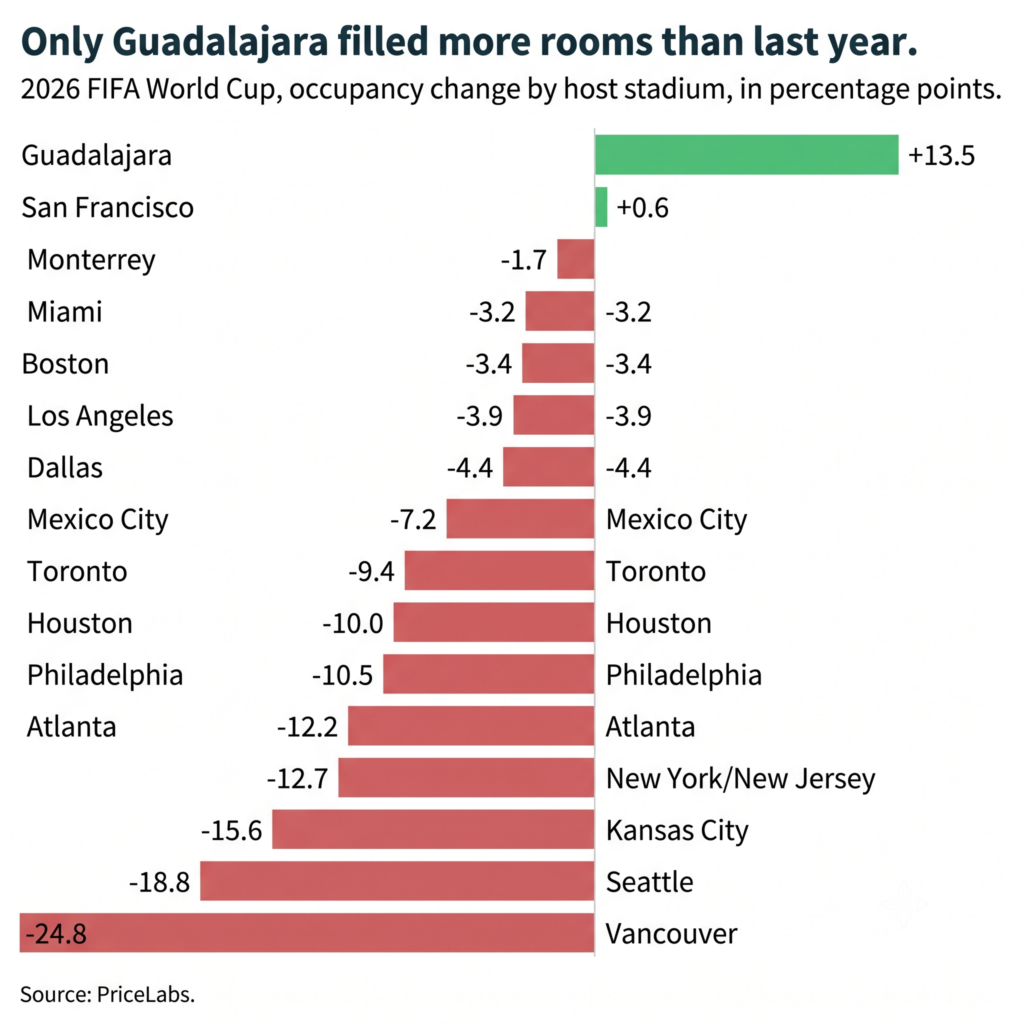
That flat Mexico number hides a split: one host city carried the entire gain while the other two were flat or down, and every national figure blends busy match nights with the slower nights around them. Five US markets (Miami, New York and New Jersey, Atlanta, Philadelphia, and Seattle) also read worse than they are, because they hosted the Club World Cup on these same dates last summer, lifting their 2025 baseline. Even so, the pattern holds. All sixteen stadium markets earned more per rental than a year ago, and at about thirteen occupancy was flat or down. The gain was a pricing gain.

The biggest fan bases drew crowds, not extra bookings
The assumption before kickoff was that the biggest, most loyal fan bases would add demand. Their matches did draw the highest occupancies of the whole tournament, with Brazil, England, Germany, and Argentina all in the 60% to 70% range. But those same dates were as full or fuller a year ago. The star power packed rooms against the rest of this year’s schedule, not against last year. The pull of the big names was real. The extra guests were not.
Guadalajara was the only host city that filled up.
Guadalajara is the city behind Mexico’s flat national number, and the exception the rest of the tournament is measured against. When Mexico played South Korea there on June 18, occupancy reached 71% against 45% on the same date a year earlier, and revenue per listing rose 368%. The city had more listings than the year before, not fewer, and still filled more of them.
Two things set Guadalajara apart. The fans who came faced no real barrier: Mexicans traveled within their own country to watch Mexico, needing no visa, and foreign supporters like South Korea’s found Mexico far easier to enter than the United States. And there was room to grow. June is not high season in Guadalajara, so the city went into the tournament near 45% occupancy, well below the 70% to 80% that strong US and Canadian summer markets were already running, leaving empty nights for the World Cup to fill.
The fans the 2026 FIFA World Cup counted on did not arrive.
The fans the tournament was built to attract met a wall of barriers, and nearly all pushed the same way: they thinned the international, multi-night guest who fills a rental while leaving the local fan who fills a seat.
Some were blocked, others stayed home
A US travel ban covered the fans of four qualified countries, Côte d’Ivoire, Haiti, Iran, and Senegal, shutting out whole national fan bases at once. The forty-plus Moroccan supporters denied visas despite holding tickets and hotel rooms are only the cases that surfaced, a glimpse of the far larger number who never secured a visa or a ticket at all. And the Department of Homeland Security confirmed immigration agents would be at stadiums, giving fans in immigrant-heavy host cities reason to stay away.
For others, the trip stopped being worth it
Even fans who could enter faced rising costs. A round-trip train to MetLife Stadium ran $98 against a normal fare near $13. And the ticket market flagged the soft demand early: before kickoff, FIFA cut prices across all 104 matches and handed back most of its block-booked hotel rooms. Whether those cuts revive demand for the rest of the tournament is an open question.
Where the barriers hit, the data followed
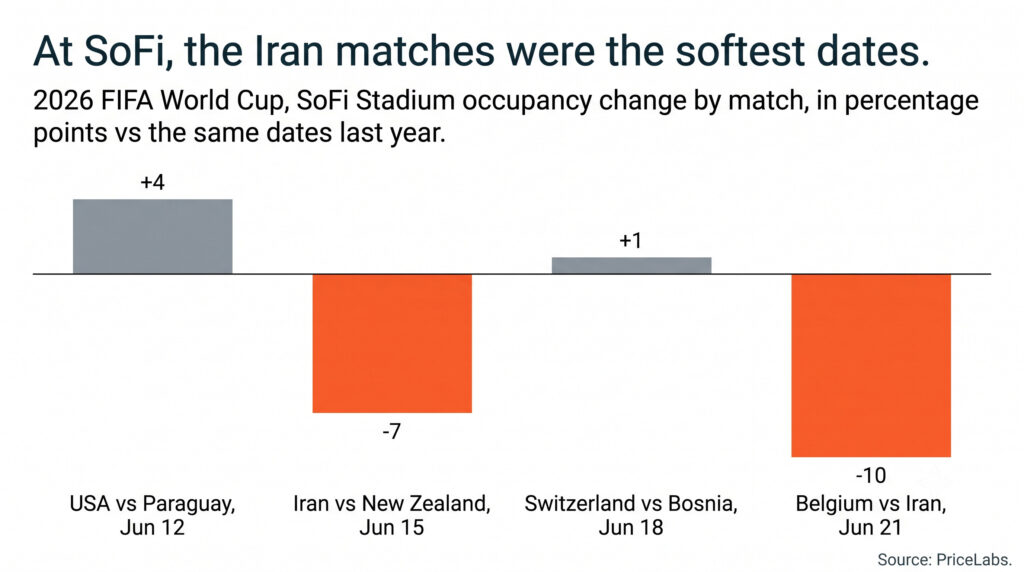
At SoFi Stadium in Los Angeles, the two matches involving Iran were the venue’s weakest dates, each down seven to ten points against last year while its other games held or rose, and SoFi had fewer listings than before, so supply was not the cause. Vancouver is the plainest case: near 75% occupancy last June on ordinary summer demand, then 50% this year, the largest drop of any venue, even with rates up 83% and supply capped under the city’s short-term rental rules. The high prices sat on top of the nights the regular summer guest would have booked, and that guest did not pay them.
The premium was real. The crowd was not.
Whether that is a bad result is a fair question. A rental that books fewer nights at a far higher rate earns more for less work, and charging a premium to the fans who did come is a reasonable answer to a thin crowd. The harder question is whether those rooms, priced for the demand that actually arrived rather than the demand hoped for, would have filled more and earned more in total. The data cannot settle that, and it differs by market. Each operator faces the same call: price for the demand you hope for, or the demand in the building.
What the group stage settles is the shape of the demand. The premium landed almost entirely in the rate, paid by the domestic, short-stay travelers who were always going to come. The international visitor the 2026 FIFA World Cup was built for met visa bans and travel costs, and most could not make the trip, while the pricing meant to capture that visitor priced out the ordinary summer traveler these markets rely on. Many hosts charged more to fewer people. The one market that escaped it was Guadalajara, the only host city a fan could reach without a visa or a border.

Guneet has spent five years working at PriceLabs, developing deep expertise in short-term rental operations and hospitality technology. She brings that practitioner’s lens to her writing at RSU, covering platform updates and making sense of market data for property managers.