


Tenants across five rent-stabilized buildings in Queens joined a class action lawsuit against A&E Real Estate, alleging the landlord engaged in a scheme to systematically and illegally overcharge tenants in more than 600 units by an estimated $5 million, an allegation that the landlord denies.
According to New York housing law, tenants who are being overcharged are entitled to rent refunds, rent reductions and properly rent-stabilized leases.
This is not the first time A&E has come under public scrutiny by tenants claiming mismanagement. A&E’s executives, Margaret Brunn and Donald Hastings, have notoriously taken the #1 and #2 spots, respectively, on the NYC Public Advocate’s annual Worst Landlord Watchlist for 2025.
The lawsuit, filed by law firm Newman Ferrara LLP, follows an investigation by watchdog group Housing Rights Initiative (HRI), which was conducted with support from the offices of Public Advocate Jumaane Williams, City Comptroller Mark Levine and Queens Borough President Donovan Richards.
After the investigation, HRI claimed A&E, one of the largest owners of rent-stabilized apartments in New York City with close to 15,000 units of housing under its control across four boroughs, pulled off this alleged scheme by claiming to have performed individual apartment improvements (IAIs) to substantially increase rents across its portfolio.
However, HRI said its investigation found no evidence that those improvements were ever performed.
It cited one apartment at 34-15 Parsons Blvd. in Flushing, where the rent increased from $1,398 to $2,941 between 2018 and 2019, which HRI said would have required approximately $62,000 in IAIs to be legally justified. But, they claimed building permits associated with this building — a matter of public record — showed no evidence that such improvements were ever made.
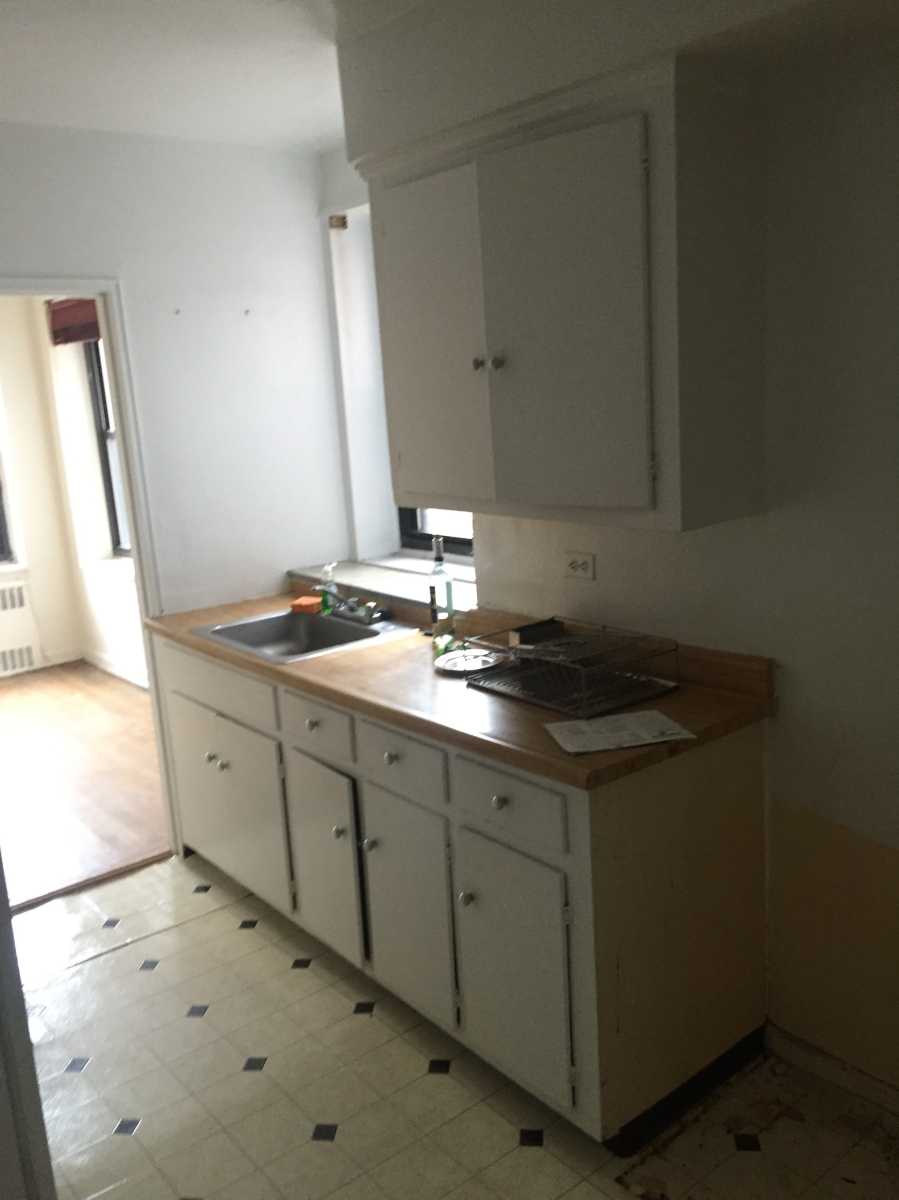
In response, an A&E spokesperson sent QNS before and after photos of renovations performed on apartment 5R at 34-15 Parsons Blvd. — the same location cited by the HRI investigation — which the spokesperson said served as “clear evidence” of the $62,000 renovations.


The spokesperson then accused Roger Sachar, a partner at Newman Ferrara, of being an “opportunist” and filing lawsuits backed by “absurd claims.” They asserted the attorney is merely seeking to profit off his clients while blanketing owners of rent-stabilized buildings with lawsuits.
“Roger Sachar has been unsuccessfully suing A&E-managed buildings for ten years and has gotten absolutely nowhere with them,” the A&E spokesperson wrote to QNS on July 29. “Filing baseless lawsuits against good managers like A&E, which has invested $850 million in building upgrades, is a waste of everyone’s time and does nothing to improve the lives of New York’s working families.”
Sachar and Ferrera filed a similar lawsuit in 2016 that was initially dismissed, but in 2019 the decision was reversed by New York’s Appellate Division, which allowed the lawsuit to proceed. In February 2025, a judge denied the lawsuit’s class action status and ruled that tenants had to proceed individually, although that decision was also reversed and certified by a higher court in July 2025.
Nonetheless, there have been other successful lawsuits against A&E.
In January, Mayor Zohran Mamdani’s administration announced a $2.1 million settlement with A&E — the largest of its kind in the city’s history — requiring the company to correct more than 4,000 building code violations. In June, a judge ordered quick repairs at an A&E building in Elmhurst following a lawsuit filed with the support of Queens Legal Services and Asian Americans for Equality (AAFE).
There are also other pending litigations, including a lawsuit filed in June 2024 by tenants at 43-09 47th Ave. in Sunnyside. The tenants demanded A&E be held accountable for “failing to properly supervise their contractors and/or employees” after a contractor hired by A&E illegally used a blowtorch to remove lead paint from a wood doorframe, leading to a devastating fire that left many tenants homeless.
Regardless, A&E’s spokesperson assured the company is committed to providing its residents with well-managed workforce housing even as it navigates through what they called “frivolous lawsuits” and a housing crisis, which they attributed to recent rent-stabilization laws and regulations.
A&E cited the Housing Stability and Tenant Protection Act of 2019, which eliminated landlords’ ability to claim a 20% vacancy bonus when a tenant moved out, strengthened protections for tenants from sudden rent hikes and retaliatory evictions, made it more difficult for landlords to legally deregulate rent-stabilized apartments, and prevented landlords from charging other fees for things like nonpayment cases.
Notably, the 2019 law also limited landlords to a maximum of three IAIs, which together are capped at $15,000 over a 15-year period. When amortized, Housing Justice for All explained, it translates to a rent increase of approximately $89 a month. Landlords are also required to adhere to a schedule of reasonable costs to prevent fraud, and to “roll back” the IAI increase after 30 years.
HRI said the fraudulent overcharges uncovered by the investigation represent “yet another example of this landlord’s already demonstrated pattern of flagrant disregard for tenants’ rights,” emphasizing that the watchdog group is determined to play a role in “continuing to hold A&E accountable for their abuses.”
“When a landlord defrauds a tenant on rent, they aren’t just stealing their money and their affordability — they’re stealing their quality of life,” said Aaron Carr, founder and executive director of HRI. “Today, we are putting every landlord on notice: if you break the law, the law will find you, and you will be held accountable.”
HRI added that the lawsuit represents only the first phase of its broader investigation into A&E’s portfolio. The watchdog group said it would continue investigating additional properties and working to ensure that every tenant harmed by these alleged unlawful practices has an opportunity to seek justice.
“A&E has made an entire business model out of buying up rent-stabilized buildings, jacking up the rents and contributing to making our neighborhoods increasingly unaffordable for working New Yorkers,” said Michael Shank, organizing director of HRI. “They are the poster child for ‘bad landlord,’ and HRI won’t rest until all A&E tenants have a properly stabilized lease and are compensated for any and all overcharges.”
“A&E holds the top two spots on our Worst Landlord Watchlist for a reason,” PA Williams said. “Every day, tenants in A&E buildings have lived in conditions no New Yorker should have to accept, and every day they have waited for accountability. Landlords who decide to treat housing as purely a profit machine rather than a home should know that tenants are organizing, the law is catching up, and we will stand the worst actors’ efforts to put profit over people.”
Williams said the action lawsuit is one path to accountability and pledged that his office will continue to stand beside tenants through this litigation and beyond.
“For far too long, A&E Real Estate has taken advantage of tenants across Queens, forcing working-class families to pay more than they should have in rent while simultaneously allowing their buildings to fall into startling disrepair. That must end now,” BP Richards added. “Thank you to the Housing Rights Initiative for its partnership as we fight to hold this notorious landlord accountable and support its tenants who have borne the financial brunt of A&E’s malfeasance.”
While HRI claimed that A&E, and countless other real estate companies like it, have for too long been allowed to “openly and systematically flout New York’s rent stabilization laws,” it was pleased to see these practices brought into the public spotlight. They said they look forward to continuing working with government partners to hold landlords accountable and protect tenants’ rights.
At the same time, the watchdog group said the long-term responsibility for enforcing these laws should not fall on nonprofits, whose budget they said is a “fraction of a fraction of a fraction” of the state’s housing enforcement agency.
HRI said New York must continue building enforcement capacity at every level of government and provide the New York State Division of Housing and Community Renewal with the funding, staffing and resources it needs to effectively fulfill its mandate of protecting the rights of New York’s tenants.