



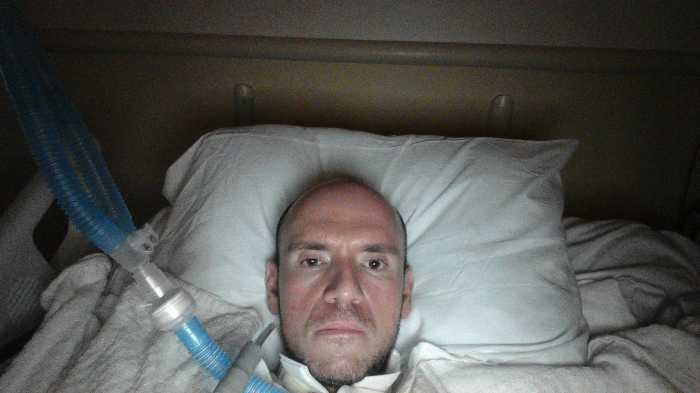
As he lay in a hospital bed unable to move or speak, Mikhail Vinitsky was told by a friend he was being sued for over $10,000 in Brooklyn Housing Court for back payment of rent, new fees and a penalty for not recertifying his income at his Mitchell Lama apartment.
This was a shock to Vinitsky: He had set up an autopayment system to pay his rent (which was being deducted from his bank account monthly), so he thought he was covered. He also wasn’t aware of receiving any notice that he needed to pay additional maintenance fees or recertify his income, a yearly requirement for Mitchell Lama tenants.
Vinitsky had been in the hospital for months getting treatment for ALS — the incurable, degenerative neurological disease — so he wasn’t home to see any notice that might’ve been sent to him.
An ex-NYPD officer who’s been living in the Kings Bay Houses for over 30 years and dealing with ALS since 2014, Vinitsky said his landlords are “well aware” of his condition, that the management knows his email and “could have emailed him that there was a problem.” But he said the management instead opted to send any notices by mail — and eventually filed a non-payment suit against him, sent his apartment while he wasn’t there.
When he was first sent photos of the court documents by his friend who checked his mail, Vinitsky didn’t know what to do. He told amNewYork Law he was more than happy to pay any maintenance fees and any difference in rent he owed if it had gone up, but didn’t know how to send that payment in, and didn’t think he should have to pay additional late fees for notices he hadn’t been able to receive since he was in the hospital, but wasn’t sure how to get those charges removed.
He also said he has no family besides his nearly 90-year-old mother. He cannot speak well on the phone (most of his communication is through eye-gaze computer text) and he does not have anyone else who could go to housing court on his behalf to find out more information.
“It’s literally unconscionable to do this and even try to evict a retired NYPD police officer that is straight out on life support and almost completely paralyzed,” Vinitsky wrote in a statement to amNewYork.

It’s not clear whether Vinitsky’s landlord knew he was in the hospital and unable to receive notices at home. By law, when landlords know a tenant has a disability, they are supposed to make reasonable accommodations to ensure tenants are communicated in a way that’s accessible to them.
When asked for comment, the management company said that, to their knowledge, Vinitsky hadn’t consistently physically lived in the apartment for years (since he’s been in the hospital), and that, under Mitchell Lama co-op rules, a person must live in the apartment for six months and one day each year.
“NYC HPD, which oversees all Mitchell–Lama developments, has informed us that we must seek eviction for Mr. Vinitsky, who has not been there,” management company Vintage Real Estate Services wrote in a statement. “We are sympathetic to his situation and have given him time to show that he can come back to live in his apartment. However, we have been told that due to his current state he will no longer be able to live in the building.”
Vinitsky told amNewYork that he plans to live in his apartment after he gets out of the hospital and will be homeless without it and that, “the hospital is not a residence in any shape or form.”
The Legal Aid Society said it has reached out to Vinitsky, been in communication with him, and offered him representation after amNewYork Law brought his case to their attention. They cannot make any guarantees about his case, but said they expected to be able to help find a resolution.
Attorneys there said that people finding themselves in situations like Vinitsky’s isn’t uncommon — but it can be incredibly jarring, especially when people thought they had everything covered, as Vinitsky did.
“You’ve put things in place to help you manage your life and your financial responsibilities,” said Legal Aid staff attorney Jeannine Cahill-Jackson. “So, it’s not even on your radar that you could owe money because you believe that you have set up all of the systems to be able to take care of that. … You’re not even on the lookout for court papers [or] aware that you’re behind in rent, which only compounds the confusion of ‘What do I do? What is this for? I didn’t even know I was at risk.’”
Here’s what Legal Aid says you should do to get the help you need if you’re caught by surprise to learn your landlord has taken you to housing court.
Respond in person, and ask for assistance
One of the best things you can do, Cahill-Jackson said, is to show up to court in person. If you are being sued because your lease has expired or your landlord is accusing you of violating some term of the lease, known as a holdover, the court date will be on the court papers.
When you show up for your court date, you should be connected with an attorney for free if you qualify via your age or income level under the city’s Right to Counsel program. If you do not have counsel, you’ll still be able to ask questions to ensure you understand everything in front of you.
The court clerk can also explain anything in the papers you may not understand. When you arrive, ask for the clerk or for someone to explain a suit filed against you, and you’ll be able to get your questions answered.
“Even if you just go to the courthouse and say, ‘I got this. What do I do?’” Cahill-Jackson said. “They will help you.”
If you’re being sued for non-payment of rent, you have to file an answer before you’ll get your first court date where you’ll be connected with an attorney. To do so, the most reliable – and sometimes the only – way is to respond in-person, at the courthouse.
Bring your photo ID, your court papers and other notices you’ve received, Cahill-Jackson said. When you get to the court clerk window, show them your documents and answer their questions. Then, you’ll receive a court date where you’ll be connected with an attorney.
You’ll be able to talk with the attorney and coordinate about your case and they’ll be able to appear on your behalf, so you never have to go to court if you’re physically or medically unable to, or if you work a job where you can’t get a day off.
Have someone respond for you
If you cannot go in person to a court date, ask a friend, family member, caretaker, neighbor, or anyone you trust to go on your behalf. They will be able to connect with an attorney for you and can share your contact information with them and their contact information with you, Cahill-Jackson said.
You can also have someone go to the court for you on your behalf and answer for you, or try to do so over the phone (though Cahill-Jackson says she does not recommend relying on this), email the court’s ADA line for a reasonable accommodation or call the tenant helpline via 311 to get the additional legal counsel you need.

The subject of whether or not there are enough housing attorneys to help tenants who are served eviction papers and housing court suits is a tricky one: Cahill-Jackson said there currently aren’t, but that gap is closing a bit each year.
However, showing up in court or having someone show up on your behalf is still the best way to connect with an attorney. And, if getting legal representation that way isn’t working out, getting guidance via the 311 tenant helpline can help you navigate what you need to do, how to respond to court documents, and how to act in court.
Call the tenant helpline via 311
If you receive court papers in the mail and do not understand them, calling 311 and asking for the Tenant Helpline is one of the best things you can do, Legal Aid said. The line is staffed by paralegals who can provide specific, individualized guidance on what you should do in your case and what the documents you’ve been sent mean.
Those paralegals can also help guide you through filing your answer to a non-payment case, Cahill-Jackson said.
Email the court’s ADA line
If you have a disability that prevents you from going to court, another way to get help answering a housing court suit against you is to email or call the court’s Americans with Disabilities Act hotline, where you can let the court know you’re disabled and can’t appear in court or respond to the papers filed against you.
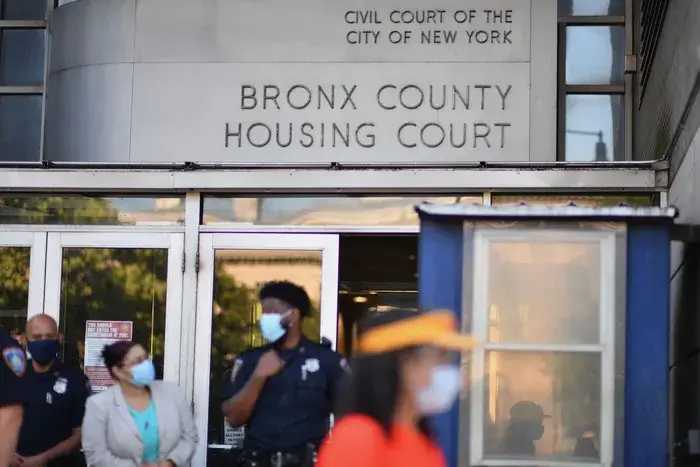
You can also explain your situation a bit, for example, telling the court you haven’t been able to receive your court papers because you’ve been in the hospital due to a disability. The court is supposed to offer a reasonable accommodation or guidance to you in navigating your case.
It’s helpful, said Legal Aid attorney Edward Josephson, but many people don’t know about it and miss out on valuable assistance.
“You can request an accommodation by email or telephone, but people don’t know that that exists,” Josephson said. “So, they default. They just don’t answer the court papers, so then the next step in the procedure is that the landlord would request a judgment on default,” which can lead to eviction.
Stay calm and advocate for yourself
Cahill-Jackson said one of the most important things to do is ensure that stress and anxiety over being served legal papers doesn’t immobilize you: Things get worse when you don’t respond, she said, and help is available.
“It’s very overwhelming and confusing,” she said. “Try really hard not to get so overwhelmed that you’re forced to inaction, because it can only make the situation trickier. Reach out for help early and often, as much as possible, and don’t be afraid to share that you need help. And, if you need accommodation for a disability, or there’s certain things that you can’t do or understand, raise that early and often as well.”
And, if the above avenues aren’t working, Cahill-Jackson said reaching out to elected officials in your area and asking to be directly connected to free legal service providers, like Legal Aid, or guided through the process by their constituent services teams, who sometimes have an attorney on staff to help people in their districts through these processes.
“These are not the most clear pathways,” Cahill-Jackson said. “But, if you weren’t able to connect other ways, and you do want to try every avenue, those are definitely avenues which can work out.”
They are not guaranteed to work, she said, but people should feel empowered to keep reaching out for help until they get what they need.